

MAXIMIZE YOUR
BY COACHING WITH CELINA
FEATURED IN:


WHO IS
CELINA EKLUND
As Master Facilitator with The Elliott Group, I help individuals and businesses scale with confidence—mastering sales, leadership, and client experience.
With over a decade in the automotive industry, my turning point came in 2021 when I invested over $25K in mentorship with Andy Elliott. In just six months, I rose from top-performing salesperson to become the first female finance and sales manager in my company, eventually leading a sister store to record-breaking numbers. That journey transformed my life—and now, I help others experience the same.
Let’s connect for a powerful 15-minute call that could change the trajectory of your business.

ABOUT COACHING WITH CELINA EKLUND
Is Private Coaching Right for You?
Absolutely—if you're ready to elevate your personal and professional success. My coaching is highly personalized, but 1-on-1 sessions allow us to go even deeper into your unique strengths, challenges, and goals. Together, we’ll craft a customized plan that aligns with your vision and fits seamlessly into your life.
Who Do I Work With?
Public speakers looking to captivate audiences
Professionals seeking career advancement
Entrepreneurs and business owners wanting to sharpen their leadership skills
Sales professionals aiming for higher conversions and authentic connections
Individuals on a journey of personal growth and authenticity
Why Invest in a Consultation?
After 15 years in business, I’ve learned that self-education is the greatest path to success. Investing in yourself isn’t just about gaining knowledge—it’s about taking yourself and your future seriously.
Your initial consultation is a 1-hour private session where we’ll dive into your intake forms, assess your current challenges, and outline a strategic path forward. This isn’t just a conversation—it’s a powerful first step toward real transformation.
How to Get Started
STEP 1
Click the button below to book your coaching session.
STEP 2
Fill out a brief intake form to help tailor our session.
STEP 3
Instantly schedule your consultation at your convenience.
I look forward to working with you and helping you take the next big step toward success!
SEE WHAT CELINA EKLUND IS DOING!


Get In Contact With Celina
If you have any questions about coaching with me, hosting me on your Podcast, or anything else, please fill out the form below, and I’ll be in contact.
Revenue From Retention PODCAST
Welcome to the Revenue From Retention podcast, hosted by Celina Eklund, a podcast dedicated to infusing your midweek with motivation, strategies, and success stories. With Celina at the helm, each episode brings you expert insights and practical advice from thought leaders across industries. Dive into topics spanning personal growth, career advancement, and leadership development, all aimed at empowering you to conquer your goals. Tune in every week on Apple Podcasts, Spotify, and other major platforms for a captivating blend of inspiration and actionable tips, fueling your journey towards success in both professional and personal realms.


Latest News
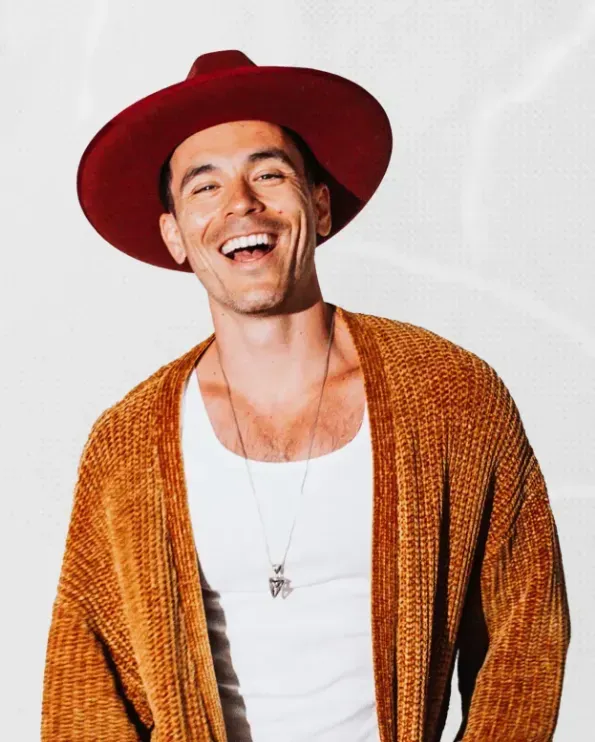
The Psychology Of Falling in Love
There are people you talk to and walk away feeling mildly entertained. Then there are people who make you feel like you have been quietly missing something important about your own life.
Adam Roa is the second kind.
A poet, coach, and nomad who has spent the last eight years without a lease or a home base, Adam has lived across the world — Japan, Bali, Thailand, the Middle East, South America, Australia, and Portugal. He has been paid as much as $1 million for a single coaching contract. His poem “You Are Who You’ve Been Looking For” has been viewed over 250 million times. And it was only the second poem he had ever written.
But none of that is the most interesting thing about him.
The most interesting thing is how it all happened.
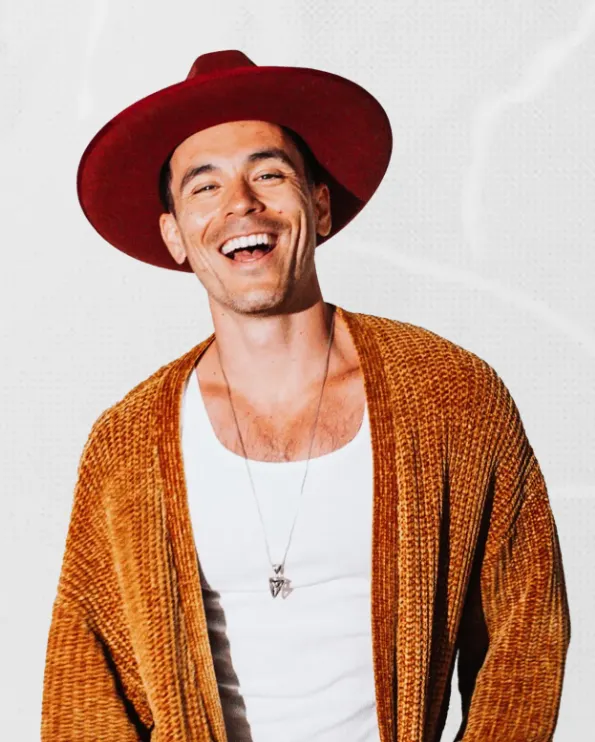
Vulnerability Is Not a Weakness. It Is the Gateway.
In 2018, Adam went through the end of a 10-year relationship. Most people process a breakup privately, maybe in a journal or with a therapist. Adam hired a production crew and let them follow him around the world for a year, filming what it actually looked like to grieve something that significant.
“It was basically me crying all over the world,” he said. “All the exotic locations. I was just crying and processing.”
He called it a way of showing people the ugly, uncool, raw sides of himself. What surprised him was what happened next: he came out okay. He was not ostracized. His friendships did not collapse. And something else happened that he did not expect. The vulnerability created a connection.
“I believe that vulnerability is the gateway to connection,” Adam said. “By being vulnerable and putting myself out there, I was able to create some really incredible connections, whether that be through social media or directly in person.”
But he is careful to add a distinction that most conversations about vulnerability skip entirely. There is a difference between being open and being reckless with your openness.
“If you’re vulnerable in spaces that are unsafe, that’s how you create trauma,” he explained. “You are letting sensitive parts of yourself be exposed to people who don’t know how to treat those parts of you as sacred.”
The skill, he argues, is discernment. Knowing which people and which spaces are actually safe enough for your full self. And for many people, that is not their immediate family or their oldest friends. Those are often the people most threatened by growth, because change in you requires change in how they see you.
“Those people are so accustomed to who you’ve been that you changing can be very scary,” Adam said. “They can take that as a threat and try to shut it down.”
This is why coaches exist. Why intentional communities exist. Not to replace your existing relationships, but to create containers where becoming a new version of yourself is not just tolerated. It is the whole point.
The Poem That Changed Everything (And the Fear That Almost Stopped It)
Adam had never heard spoken word poetry before the night he attended a casual house gathering in Santa Monica. The host called it Fred Talks. Everyone got five minutes. The last person to go was a spoken word artist.
“Immediately, I had this bolt of lightning,” Adam said. “I went: I can do that.”
He went home and wrote his first poem in 24 hours. The next day, he was watching college football with a group of guys when he turned to them and said he had written a poem and wanted to read it.
He described the moment as terrifying. These were not the kind of friends who asked each other to pause a football game and listen to poetry.
“Back then, that was terrifying,” he said. “Guys and poetry. That’s not masculine.”
But he read it anyway. And a friend named Chris, who had been heading to the bathroom, stopped and turned around. After the poem ended, Chris said, “Your next one should be called ‘You Are Who You’ve Been Looking For.’”
Adam wrote that poem in two days. Five years later, it became one of the most viral poems in history, viewed over 250 million times, leading to speaking invitations from the Human Rights Foundation, Mindvalley, and conferences around the world.
None of it happens without fear. None of it happens without the yes.
“Success only makes sense in hindsight,” Adam reflected. “We look back at the choices we made, the yeses, the moments we faced our fear. In the moment, it’s not like I was thinking I’m going to become this famous poet and it’s going to change my life.”
He calls them breadcrumbs. Moments of inspiration that the universe, or God, or something larger than us, places in our path. The question is not whether they show up. They do. The question is whether we say yes to them.
Consciousness Is Just Pattern Recognition
One of the more quietly profound things Adam shared was his framework for what coaching actually does, and for that matter, what personal growth actually is.
“Our consciousness is the sum of the patterns we can recognize,” he said. “The sum total of all the patterns you can see in reality. That is your current consciousness.”
When we expand our awareness, it is because we have learned to see a pattern we could not see before. Maybe through therapy. Maybe through a plant medicine journey. Maybe through a difficult conversation. The moment the pattern becomes visible, it creates a choice we did not previously know we had.
“When we can see a new pattern, it gives us the opportunity to make new choices that we previously couldn’t even see,” Adam explained. “The quality of our life is going to be based on the quality of the choices that we make.”
He uses The Matrix as a metaphor. There is a character in the film who sits in front of a screen full of cascading green numbers and reads them like a language. He can see Neo getting into trouble before anyone else because he understands the code underneath the image.
“If you can see the code, you can write new code,” Adam said. “If you understand the code, you open up a whole new world of possibilities.”
Most people operate within the parameters they were given. The defaults they inherited from childhood, culture, family patterns, and past relationships. The work is learning to see the code beneath those defaults so you can rewrite it.
His book, Crazy Love, is an attempt to help people do that specifically in the context of love and relationships. Through poetry and journal entries, it offers a behind-the-scenes look at his own journey through heartbreak, and the patterns hidden inside that journey that most people would miss without someone pointing them out.

The Dating World Is Struggling. Here Is Why No One Wants to Say It.
Adam is not particularly worried about being controversial. He has made peace with the fact that some topics require more than 90 seconds to discuss, and that the people who want the 90-second version are probably not his audience anyway.
“Today’s modern dating environment is really unhealthy,” he said directly. “In many ways, it’s broken.”
He pointed to the statistics. Rising divorce rates. More people are choosing not to marry. More families are formed outside of marriage. More single-parent households. Declining birth rates in countries like Japan and South Korea. All of this happening at the same time that dating apps and social media have made it easier than ever to connect with other people.
Something is not working.
Adam’s argument is not ideological. He is not advocating for any particular structure of family or relationship. His point is simpler: a relationship is a skill set, and most people are not developing it.
“There are so many skills necessary to be in a relationship well,” he said. “Not enough people are taking the time to develop them.”
He described a generation being raised by parents who themselves did not model secure, loving partnership. Without those models, the only way to course-correct is to deliberately learn what was never shown. That means getting curious about emotional intelligence, communication, attachment patterns, trust, and the difference between commitment and monogamy, which he argues are not the same thing at all.
He chooses not to cover this topic in short-form video anymore. The nuance gets lost. The context disappears. Without context, people react to the surface of the idea and miss the point entirely.
“When there’s no context behind it, everybody jumps the gun and wants to judge,” he said. “But when you have 20 minutes with something, and then part two, and you can go deeper, that’s when understanding actually happens.”
Go Deep, Not Wide
The last thing Adam shared, and arguably the most actionable, was an observation about how most people consume information.
“Today we are going wide, not deep,” he said. “I look at people on Instagram following 900 different people. What are you getting from that?”
His advice: find the few people whose lives genuinely resonate with you. Not their aesthetic. Not their follower count. Their actual way of being in the world. Then go deep into everything they have created. Read the emails. Listen to the full podcast episodes. Watch the long-form YouTube videos. Invest in their programs or coaching if it aligns.
“Find a few people and go deep,” he said. “That’s the single biggest shift I hope people will make.”
He lives this himself. He recently signed up for a mobility program because he realized, as he gets older, that he needs to develop that area of his body. He is not scrolling through random Instagram tutorials. He found an expert and committed.
“I put my money where my mouth is,” he said. “I want to learn this thing because I want to get better. So I’m going to learn from experts, not waste time going wide.”
The broader principle underneath this is one Adam has built his entire life around: only take advice from people who have built what you want to build, lived what you want to live, and have the receipts to show for it.
“Too many people today are trying to tell you how to live, and they have not built it themselves,” he said. “They’re great at making viral TikTok videos, and we’ve confused that with real value.”
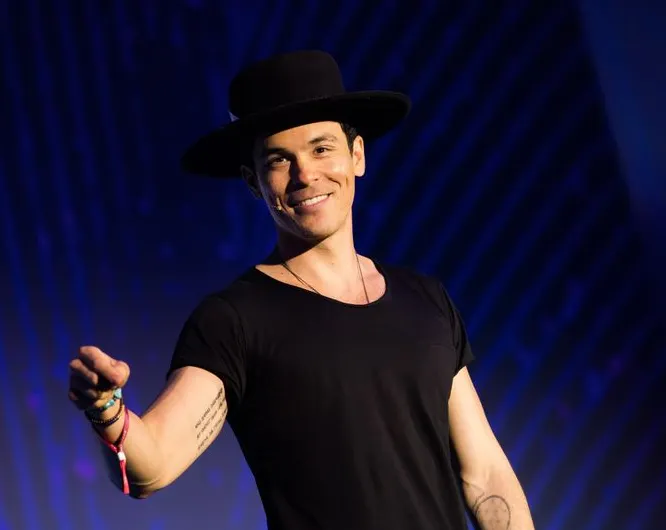
The Receipts
Adam Roa has a nomadic lifestyle that has stretched over eight years. A viral poem that has reached a quarter of a billion people. A seven-figure coaching business. A book about love written through the hard-won evidence of his own heartbreak. And a relationship he describes as healthy and loving, built on the far side of everything that had to fall apart first.
He is not telling you to do what he did. He is telling you to follow your own breadcrumbs, to say yes to the moments of inspiration that scare you a little, to find the spaces where it is safe to be the version of yourself that is still becoming, and to go deep with the few people who actually show you something true.
The world is full of people going wide.
The ones who go deep are harder to find. But they are the ones worth following.
About me:
I am currently a Master Facilitator for The Elliott Group in addition to being on the board of advisors for our Cultural Transformation Department in ELLIOTT ARMY.
With over 14 years of client service experience, I have held substantial leadership roles in the automotive industry. I’m also an accredited coach, a writer, a speaker, and a triathlon finisher. To contact me for engagements, you can reach me at [email protected].
