
MAXIMIZE YOUR
BY COACHING WITH CELINA
FEATURED IN:


WHO IS
CELINA GLENNON
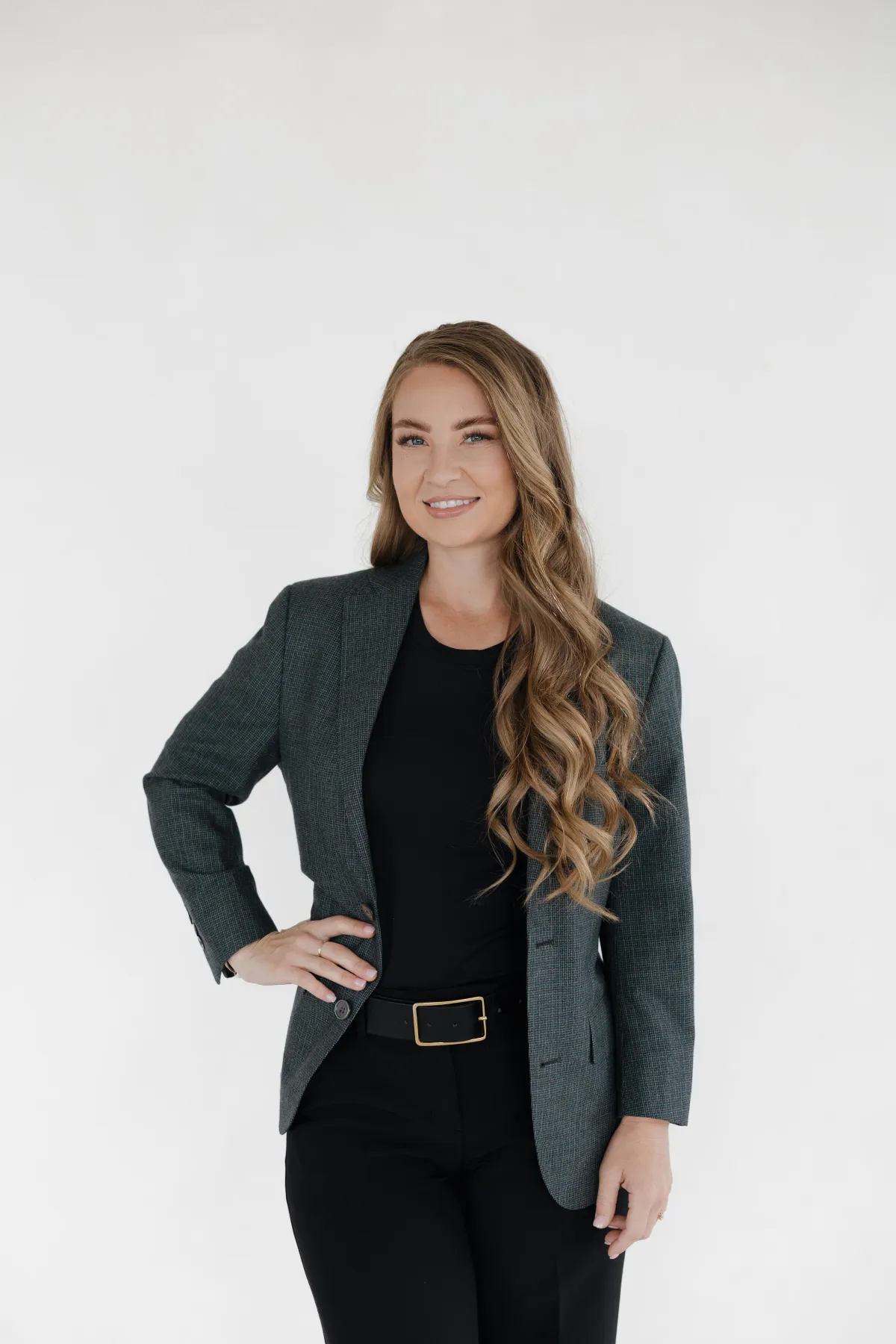
As Master Facilitator with The Elliott Group, I help individuals and businesses scale with confidence, mastering sales, leadership, and client experience.
With over a decade in the automotive industry, my turning point came in 2021 when I invested over $25K in mentorship with Andy Elliott. In just six months, I rose from top-performing salesperson to become the first female finance and sales manager in my company, eventually leading a sister store to record-breaking numbers. That journey transformed my life and now, I help others experience the same.
Let’s connect for a powerful 15-minute call that could change the trajectory of your business.
ABOUT COACHING WITH CELINA GLENNON
Is Private Coaching Right for You?
Absolutely! If you're ready to elevate your personal and professional success. My coaching is highly personalized, but 1-on-1 sessions allow us to go even deeper into your unique strengths, challenges, and goals. Together, we’ll craft a customized plan that aligns with your vision and fits seamlessly into your life.
Who Do I Work With?
Public speakers looking to captivate audiences
Professionals seeking career advancement
Entrepreneurs and business owners wanting to sharpen their leadership skills
Sales professionals aiming for higher conversions and authentic connections
Individuals on a journey of personal growth and authenticity
Why Invest in a Consultation?
After 15 years in business, I’ve learned that self-education is the greatest path to success. Investing in yourself isn’t just about gaining knowledge, it’s about taking yourself and your future seriously.
Your initial consultation is a 1-hour private session where we’ll dive into your intake forms, assess your current challenges, and outline a strategic path forward. This isn’t just a conversation, it’s a powerful first step toward real transformation.
How to Get Started
STEP 1
Click the button below to book your coaching session.
STEP 2
Fill out a brief intake form to help tailor our session.
STEP 3
Instantly schedule your consultation at your convenience.
I look forward to working with you and helping you take the next big step toward success!
SEE WHAT CELINA GLENNON IS DOING!


Get In Contact With Celina
If you have any questions about coaching with me, hosting me on your Podcast, or anything else, please fill out the form below, and I’ll be in contact.
Revenue From Retention PODCAST
Welcome to the Revenue From Retention podcast, hosted by Celina Glennon, a podcast dedicated to infusing your midweek with motivation, strategies, and success stories. With Celina at the helm, each episode brings you expert insights and practical advice from thought leaders across industries. Dive into topics spanning personal growth, career advancement, and leadership development, all aimed at empowering you to conquer your goals. Tune in every week on Apple Podcasts, Spotify, and other major platforms for a captivating blend of inspiration and actionable tips, fueling your journey towards success in both professional and personal realms.


Latest News

Your Worst Moments Are Your Greatest Opportunity
I recently had the privilege of sitting down with Maria Nguyen, co-founder of Blue Hammer Roofing, for one of the most honest conversations I have had on this podcast. Maria and I were connected through a mutual friend who has become something of a master connector in my life, and from the very first phone call before we ever hit record, I knew this was not going to be a surface level interview. What followed was a two hour conversation about survival, identity, leadership, and legacy, and I am still thinking about pieces of it days later.

A Childhood Defined by Scarcity
Maria’s story did not start with advantage. She grew up in a rough part of Dallas, in a neighborhood she described as gang related and simply not the kind of place most people would choose to raise children in the 1990s. Her parents were immigrants from Vietnam, and Maria herself did not speak English until she was well into her early teens, despite being born in the United States. Her family relied on government assistance programs, including WIC, and money for basic needs like food and water was scarce.
Her father struggled with alcoholism. He had come to the United States in his late thirties, and her mother married him quickly in order to secure her immigration papers, having known him for only a couple of weeks before the wedding. Maria described a cultural dynamic at the time where a husband effectively owned his wife the way he owned his car or his house keys, and that ownership extended to how he treated the rest of the family when he came home drunk. The environment was, in her words, extremely abusive, and she and her older brother were made to witness it regularly.
By the time she was five years old, Maria said she already understood the four basic survival needs: food, water, shelter, and safety. Food and water were scarce. Shelter was uncertain. And safety was nearly nonexistent. She remembered being beaten so severely at that age that she was bloody from head to toe, and she remembered knowing, even then, that something about her home was insanely wrong.
Defining Freedom at Five Years Old
What struck me most about Maria’s story was how early she began building a plan to get herself out. She told me that as a young child, she never wanted toys or the latest gadget. She wanted exactly one thing: freedom.
By the time she was six or seven, she had broken that abstract idea down into something she could actually work toward. She decided freedom meant three concrete things: education, career, and money. She did not fully understand what any of those things meant yet in a practical sense, only that she needed to be at the highest level of each. From that point forward, she said, that mission never really changed.
Hustling From the Age of Seven
Maria started earning money almost as soon as she could talk her way into a sale. At seven years old, she sold pens, pencils, candy, and even test answers to classmates. She mowed lawns, went door to door, and sold security systems. She told me she eventually realized that the product itself never really mattered. The skill that mattered was the ability to be convincing enough to close a sale, regardless of what was being sold.
She saved everything she earned in a piggy bank, slowly building what felt like a small fortune to a child. By the time she had around five hundred dollars saved, which she said would be worth closer to a couple thousand dollars today, her father found the piggy bank, destroyed it, and took the money. When she confronted him, furious, he told her simply, “my house, my rules, my money.”
Rather than breaking her, Maria said that moment became one of the most valuable lessons of her life. She looked her father in the eyes, swallowed her pride, and thanked him for teaching her never to let anyone touch her money again. Then she went right back out and started over, this time hiding her earnings far more strategically, tucking small amounts of cash into places like empty cans instead of keeping it all in one obvious spot.
Running Away and Finding Safety Elsewhere
Maria told me she ran away from home many times as a child, not out of impulsiveness but out of a very deliberate survival strategy. Her reasoning was simple. If she was not physically near her father, he could not hurt her. So she found ways to remove herself from the house entirely, sometimes sleeping underneath playground slides at night until she was confident he had passed out, sometimes couch surfing, sometimes simply spending hours at the library or in parking lots to stay away from home.
Because the family often could not afford consistent access to water, Maria said her hygiene suffered during this period, and she knew other kids at school could tell. She wore secondhand clothes from Goodwill while her classmates wore name brand clothing, and she said friendships were scarce because of it. Still, she told me she was completely fine with that trade off, because she had already decided what she was working toward.
The Question She Had to Ask Her Mother
One of the most emotional parts of our conversation came when Maria described a night when she was around seven years old, not long after being severely beaten. It was two in the morning, and her mother came to her room, more worried about the noise waking her father again than comforting her daughter. Maria told me she gathered every ounce of courage she had and asked her mother one simple, direct question: do you love me.
She said she studied her mother’s face closely, waiting for any flicker of reaction. There was none. No raised eyebrow, no change in expression. Her mother simply closed the door without answering.
Maria told me that was the exact moment she stopped seeking approval or love from her family. She said she made a conscious decision, even as a young child, to stop waiting for something that clearly was not coming, and to instead pour everything she had into the plan she had already built for herself.
Education, Accent, and Becoming Unignorable
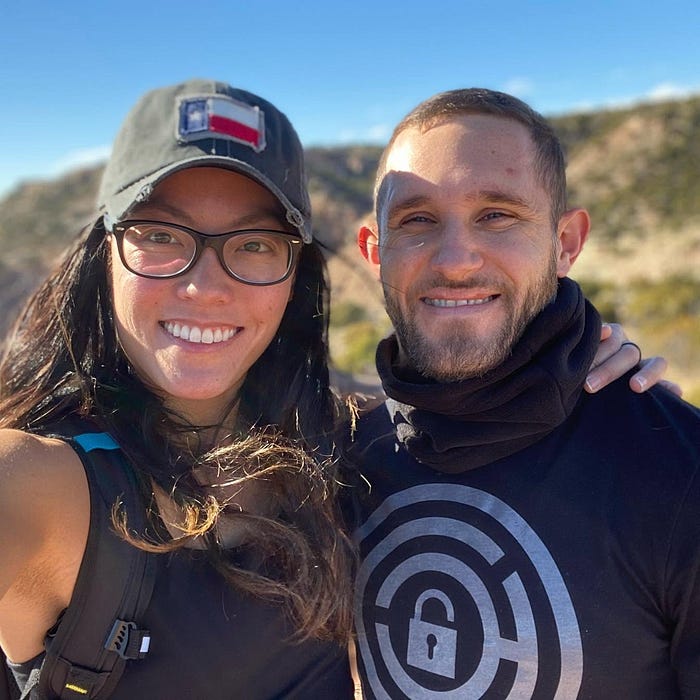
That plan worked in ways that are genuinely remarkable. Maria went on to earn a master’s degree along with two bachelor’s degrees by the age of twenty two, graduating Magna Cum Laude and never once earning a grade lower than an A throughout her entire academic career. She told me she made a deliberate point of learning to speak English without an accent, in addition to remaining fluent in Vietnamese, because she wanted to be able to communicate so clearly and confidently that people would stop and listen to her.
Her original academic path was in social work. She became a licensed therapist and worked for a period with Child Protective Services and several nonprofit organizations. She told me she still wanted to change the world during that chapter of her life, but she quickly realized there was not much financial opportunity in that field, and she knew deep down she was meant for something more, even though she did not yet know what that would be.
From Part Time Gym Job to Vice President
Maria’s entry into the fitness industry happened almost by accident. She had taken a part time job at a gym and watched the sales team in action, sharply dressed and confident, and told herself she could do that job, and do it better. She walked up to the sales manager and asked to be hired on the spot as a top performer, despite having no formal sales background.
Within two months, she went from the lowest level sales position to assistant general manager. During this same period, she was quietly homeless, staying wherever she could, including sleeping at the gym itself because she had access to the facility and could shower there. She told me she got creative and resourceful, doing laundry at laundromats and keeping herself well put together so that no one around her ever suspected what she was going through.
She continued climbing, eventually becoming the general manager of her location and then the youngest female vice president in the company’s history, a role that was almost entirely dominated by men. Maria was candid that leading men in that environment was not easy. She described one meeting where a wrestling match broke out among her male colleagues simply as a way of proving dominance to each other, something she found both frustrating and, in its own way, kind of amusing.
Rather than resent the environment, Maria said she leaned all the way into it. She became obsessed with studying leadership and sales, reading everything she could get her hands on, and surrounding herself with mentors, several of whom she now considers her closest friends and describes as millionaires and billionaires who continue to pour wisdom into her more than a decade later. She told me she wanted to be respected purely based on her results, not because of any accommodation for being a woman, being Asian, or being young.
Choosing People Over Profit
Eventually, Maria reached a turning point. She had grown deeply invested in the people she was leading at the company, and she found herself increasingly unwilling to make decisions that helped the business at the direct expense of those people. She was careful to tell me she does not fault the company itself, and that she understands profit driven decisions make sense from a purely business perspective. But she said she personally could not keep choosing profits over people, especially given her own upbringing.
That disalignment eventually led her, along with two close friends and fellow vice presidents at the company, Neil and a colleague she calls Chico, to leave the fitness industry entirely and start something of their own.
Building Blue Hammer Roofing From Nothing
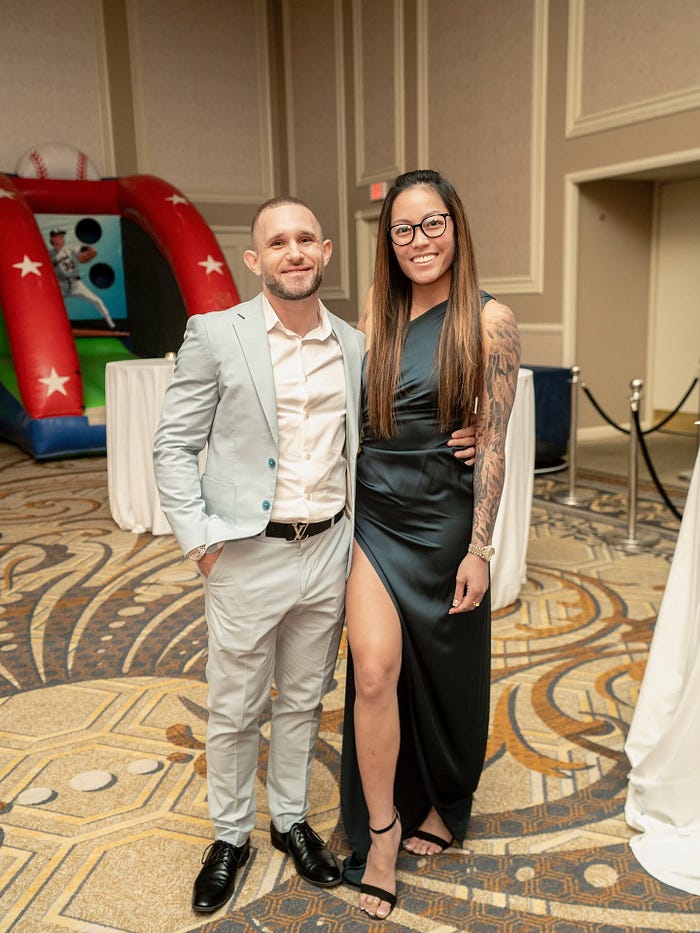
None of the three founders had any experience in roofing. What they did bring, Maria said, was years of leadership experience and a shared commitment to culture. Along with two additional business partners who joined shortly after, the five of them built the company around five core values: family, loyalty, tough honest love, extreme ownership, and pursuit of excellence, the last of which was influenced by a leadership book they had all read together as a team.
Maria was candid that they hired and fired based entirely on alignment with those values rather than raw sales talent. She told me the best performers on paper were often the worst culture fits, because they cared more about the paycheck than the mission, and the moment a bigger paycheck appeared somewhere else, that same person would leave without hesitation. Instead, Blue Hammer brought on people from all kinds of backgrounds, including former janitors, waiters, and waitresses, and gave them the opportunity to build a completely different life.
The results were significant. The company generated an estimated ten million dollars in sales in its first year and roughly thirty million dollars in its second year, eventually expanding to multiple locations and completing a private equity transaction. Much of that growth came from storm chasing across states including Florida, Indiana, Nebraska, Louisiana, and Texas, following where the hail damage and the opportunity were at any given time.
But what Maria wanted me to understand was not the revenue number. It was what that revenue meant for the people earning it. She described watching team members pay off their parents’ mortgages, buy their families their first reliable cars, and take their loved ones on vacations they never thought possible, all while still climbing onto roofs and knocking doors from sunup to sundown because they believed in what they were building. Recruiting, she said, was rarely difficult, because so much of their growth came from referrals. Team members brought in siblings, cousins, and spouses because they genuinely loved the culture.
A Name She Had to Grow Into
We also spent time talking about identity, something Maria described with real vulnerability. Her birth name was different from the one she grew up being called publicly, after her family decided at a young age that an easier, more Americanized name would serve her better. She told me she never fully felt like that name belonged to her.
It was not until years later, at the urging of one of her closest mentors and business partners who pestered her for months to share her real name, that she finally opened up. What started as a private nickname eventually evolved into a name that stuck, one that she told me finally felt like it fit who she actually was. She was careful to note that her legal last name has never bothered her the way her first name once did, and that she has fully made peace with and embraced her full identity today.
Faith, Sobriety, and Mentors as Soundboards
Maria told me she has never sought traditional therapy, which she found somewhat ironic given her own background as a licensed therapist. Instead, she said mentors have played that role in her life, people she often describes as angels who were inserted into her path at exactly the right moments, whether that meant a high school football coach who let her join his team’s summer conditioning sessions after she told him honestly that she simply had nowhere else to go, or the business mentors who later shaped her into the leader she became.
She also shared that she is currently three years and eight months sober, and that she has recently returned to her faith and to church after going through a period where she was angry with God and stepped away from religion entirely. She credits the strength of the people around her, many of whom are also sober, with helping her stay grounded during that season of her life.
A Legacy Bigger Than Herself
Toward the end of our conversation, Maria opened up about something deeply personal. She shared that she is unable to have biological children, and rather than treating that as a loss, she has chosen to see it as a clear assignment from God. Her response has been to commit to building an orphanage in Vietnam as part of her long term legacy, an initiative she plans to fund and grow through her own foundation. She told me she does not yet know exactly how or when it will happen, only that she knows deep down it is something she is meant to build.
She also talked about staying active as a way of processing her thoughts and staying uncomfortable on purpose, from cycling and running to boxing and mixed martial arts training. She was refreshingly honest that she is not naturally gifted at any of these pursuits, and that being a beginner again, after years of being the top performer in every room, has been humbling in the best possible way.
Letting Go of the Top Spot
We closed on a question I have been sitting with myself, about what it actually looks like to let go of control after building an identity around being the best. Maria’s answer was simple and, I think, one of the more powerful leadership philosophies I have heard on this show. When you are truly invested in developing another person, she said, there will eventually come a point where they want your position. At that point, you have exactly two options: help them find that opportunity elsewhere, or step out of the way so they can rise into it themselves.
Maria has chosen the second option more than once in her career, both at her previous company and again at Blue Hammer, deliberately developing her own replacement and stepping aside so someone else could grow into the role she once held. She told me she has never been afraid of starting over, because she trusts the people around her enough to know that wherever she goes next, they are coming with her.
Closing Advice
Her closing advice to anyone listening was refreshingly simple. Live with intention. Look for a random act of kindness to give away every single day, whether that means paying for the person behind you in a drive through line or simply showing up fully for someone who needs it. She believes that kind of generosity always finds its way back to you, not through randomness, but through grace.
This was a conversation about what it means to build a life on purpose, even when you start with none of the traditional advantages. Maria’s story is proof that where you start does not determine where you end up.
About me:
I am currently a Master Facilitator for The Elliott Group in addition to being on the board of advisors for our Cultural Transformation Department in ELLIOTT ARMY.
With over 14 years of client service experience, I have held substantial leadership roles in the automotive industry. I’m also an accredited coach, a speaker, a triathlon finisher, and a wife. To contact me for engagements, you can reach me at[email protected].
