

MAXIMIZE YOUR
BY COACHING WITH CELINA
FEATURED IN:


WHO IS
CELINA EKLUND
As Master Facilitator with The Elliott Group, I help individuals and businesses scale with confidence—mastering sales, leadership, and client experience.
With over a decade in the automotive industry, my turning point came in 2021 when I invested over $25K in mentorship with Andy Elliott. In just six months, I rose from top-performing salesperson to become the first female finance and sales manager in my company, eventually leading a sister store to record-breaking numbers. That journey transformed my life—and now, I help others experience the same.
Let’s connect for a powerful 15-minute call that could change the trajectory of your business.

ABOUT COACHING WITH CELINA EKLUND
Is Private Coaching Right for You?
Absolutely—if you're ready to elevate your personal and professional success. My coaching is highly personalized, but 1-on-1 sessions allow us to go even deeper into your unique strengths, challenges, and goals. Together, we’ll craft a customized plan that aligns with your vision and fits seamlessly into your life.
Who Do I Work With?
Public speakers looking to captivate audiences
Professionals seeking career advancement
Entrepreneurs and business owners wanting to sharpen their leadership skills
Sales professionals aiming for higher conversions and authentic connections
Individuals on a journey of personal growth and authenticity
Why Invest in a Consultation?
After 13 years in business, I’ve learned that self-education is the greatest path to success. Investing in yourself isn’t just about gaining knowledge—it’s about taking yourself and your future seriously.
Your initial consultation is a 1-hour private session where we’ll dive into your intake forms, assess your current challenges, and outline a strategic path forward. This isn’t just a conversation—it’s a powerful first step toward real transformation.
How to Get Started
STEP 1
Click the button below to book your coaching session.
STEP 2
Fill out a brief intake form to help tailor our session.
STEP 3
Instantly schedule your consultation at your convenience.
I look forward to working with you and helping you take the next big step toward success!
SEE WHAT CELINA EKLUND IS DOING!


Get In Contact With Celina
If you have any questions about coaching with me, hosting me on your Podcast, or anything else, please fill out the form below, and I’ll be in contact.
Revenue From Retention PODCAST
Welcome to the Revenue From Retention podcast, hosted by Celina Eklund, a podcast dedicated to infusing your midweek with motivation, strategies, and success stories. With Celina at the helm, each episode brings you expert insights and practical advice from thought leaders across industries. Dive into topics spanning personal growth, career advancement, and leadership development, all aimed at empowering you to conquer your goals. Tune in every week on Apple Podcasts, Spotify, and other major platforms for a captivating blend of inspiration and actionable tips, fueling your journey towards success in both professional and personal realms.


Latest News
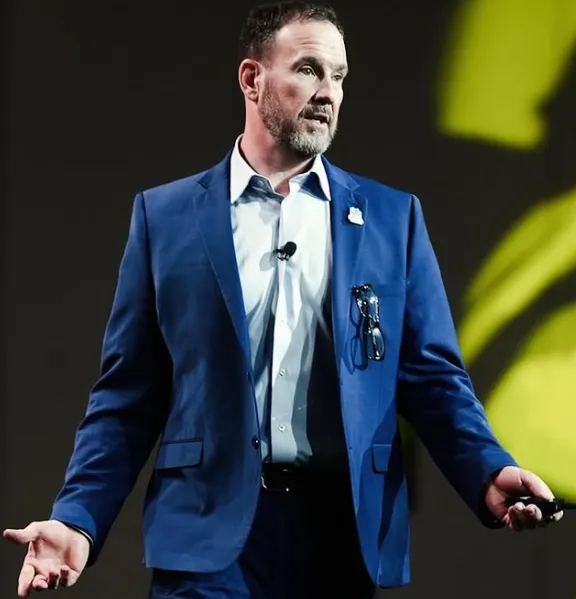
The Mentor Advantage: How Jonathan Eldridge’s Journey Proves Why Guidance Accelerates Success
The Mentor Advantage: How Jonathan Eldridge’s Journey Proves Why Guidance Accelerates Success.

The statistics are striking: Harvard Business Review’s five-year study revealed that professionals with mentors are five times more likely to earn promotions and reach their goals twice as fast as their unguided peers. These aren’t marginal improvements — they’re transformative differences that can define entire careers.
The reason is deceptively simple. A mentor eliminates the guesswork that derails so many ambitious professionals. Rather than stumbling through trial and error, you gain access to someone who has already navigated the terrain, avoided the pitfalls, and identified the shortcuts. But perhaps most importantly, a mentor doesn’t just help you move faster — they ensure you’re moving in the right direction.
A Living Example of Mentored Success
Few people embody this principle better than Jonathan Eldridge, a seasoned business development leader whose career trajectory illustrates the power of guided growth. Jonathan’s journey with the Eight Eleven Group showcased what happens when talent meets strategic direction. His leadership became instrumental in the company’s expansion, and his approach to business development challenged conventional wisdom about what drives real success.
Now, as Jonathan transitions into retirement from the group and launches his own motivational speaking company, he brings with him a philosophy forged through decades of experience — one that emphasizes substance over showmanship and authenticity over artifice.
The Soul Focus Philosophy
At the heart of Jonathan’s approach lies what he calls “soul focus” — a framework that bridges the often-disconnected realms of strategic thinking and emotional intelligence. This isn’t about choosing between head and heart; it’s about aligning them to create what Jonathan describes as the “it factor.”
“Most people think success is about working harder or being smarter,” Jonathan explains. “But the real differentiator is alignment. When your intellectual goals match your emotional drivers, you stop fighting yourself and start executing with purpose.”
This philosophy underpins his newly launched motivational speaking venture, where he’s shifting from corporate development to human development. It’s a natural evolution for someone who has always believed that business success begins with personal growth.
Humanly Improve: A Philosophy for Sustainable Growth

Jonathan’s “humanly improve” philosophy represents a departure from product-centric business thinking. Instead of asking “What can I sell?”, he encourages professionals to ask “How can I grow?” This subtle shift reorients entire careers.
The distinction matters because product-focused thinking creates transactional relationships, while growth-focused thinking builds sustainable networks. In Jonathan’s experience, the latter consistently outperforms the former — not just in revenue, but in career satisfaction and long-term impact.
The CARE Framework: 12 Attributes of Excellence
Jonathan has distilled his approach into a structured framework he calls CARE, encompassing twelve essential attributes organized into four categories:
C — The Foundation of Reliability
·Consistent: Showing up with the same energy and commitment regardless of circumstances
·Compassionate: Leading with empathy and genuine concern for others’ wellbeing
·Curious: Maintaining an insatiable appetite for learning and understanding
A — The Pillars of Connection
·Approachable: Creating space for others to engage without intimidation
·Authentic: Remaining true to your values even when it’s uncomfortable
·Adaptable: Flexing your approach without compromising your principles
R — The Markers of Trustworthiness
·Respectful: Honoring others’ perspectives, time, and contributions
·Reliable: Following through on commitments without exception
·Relatable: Sharing vulnerabilities that create genuine human connection
E — The Drivers of Achievement
·Enthusiastic: Bringing contagious energy that elevates those around you
·Execution-focused: Moving from planning to action with decisive clarity
·Eager: Approaching challenges with anticipation rather than apprehension
These aren’t abstract ideals — they’re practical behaviors that Jonathan has implemented throughout his career. The framework provides a roadmap for professionals who understand that success is built on character as much as competence.
Relationships Over Transactions
Perhaps Jonathan’s most counterintuitive insight is this: success comes from building genuine relationships, not perfecting sales tactics. In an era obsessed with growth hacking and conversion optimization, this perspective feels almost radical.
“I’ve watched countless professionals burn out chasing numbers,” Jonathan reflects. “They’re hitting quotas but losing fulfillment. The ones who thrive long-term? They’re the relationship builders. They understand that every interaction is an investment in a network that will support them for decades.”
This approach requires patience that many modern professionals lack. Building genuine relationships takes time, vulnerability, and a willingness to give without immediate return. But Jonathan’s career demonstrates that this investment compounds in ways that transactional approaches never can.
Forged Through Adversity
Jonathan’s “never give up” mindset didn’t emerge from a string of easy victories — it was forged through personal challenges that tested his resolve. While he keeps the specifics private, he’s transparent about how adversity shaped his character.
“The difficulties I’ve faced taught me resilience,” he shares. “But more than that, they taught me empathy. When you’ve struggled, you understand other people’s struggles. That understanding becomes your superpower in business and in life.”
This perspective influences how Jonathan approaches mentorship and speaking. Rather than positioning himself as someone who has all the answers, he presents himself as someone who has asked all the questions — often the hard way.
Teaching From Failure
In a culture that celebrates highlight reels and polished success stories, Jonathan takes a different approach. He values teaching from failures rather than showcasing successes.
“Anyone can tell you what worked,” he explains. “The real value is in sharing what didn’t work and why. Those are the lessons that save people years of wasted effort. Those are the insights that actually move the needle.”
This commitment to transparency creates trust with audiences and mentees. People don’t feel like they’re being sold an unrealistic fantasy — they’re receiving practical wisdom from someone who has made mistakes and extracted lessons from them.
The approach also aligns with his “humanly improve” philosophy. Admitting failure and continuous improvement are fundamentally human experiences. By embracing them rather than hiding them, Jonathan creates permission for others to do the same.
Redefining Greatness
Jonathan’s life motto captures his philosophy in a single, provocative statement: “Greatness in a person is not pursuing it.”
At first glance, this seems contradictory. Aren’t we supposed to pursue greatness? Isn’t ambition essential to achievement?
But Jonathan’s point is more nuanced. He’s arguing against the empty pursuit of greatness as a status symbol or ego boost. Instead, he suggests that true greatness emerges as a byproduct of pursuing something else — service, growth, connection, impact.
“When you chase greatness directly, you become consumed with comparison and validation,” he explains. “But when you chase growth and contribution, greatness finds you. It’s a natural consequence of becoming the person capable of creating meaningful value.”
This perspective shifts the entire game. It moves professionals from anxious striving toward purposeful development. The goal isn’t to be great — it’s to be useful, to be reliable, to be someone whose contributions matter.

The Mentorship Imperative
Jonathan’s journey and philosophy circle back to the original insight: mentorship matters because it accelerates the right kind of growth. Not just faster progress toward arbitrary goals, but faster development into someone capable of sustained excellence.
A mentor provides three critical functions that self-directed learning struggles to match:
Pattern Recognition: Mentors help you see patterns you’re too close to recognize. They’ve watched dozens or hundreds of people navigate similar challenges, and they can identify which of your struggles are unique and which follow predictable paths.
Accountability: It’s easy to let yourself off the hook. It’s much harder to disappoint someone who believes in you. Mentors create constructive pressure that keeps you moving forward even when motivation wanes.
Perspective: When you’re deep in the trenches of building a career, everything feels urgent and consequential. Mentors provide the long view — they help you distinguish between crises and inconveniences, between pivotal decisions and trivial choices.
Building Your Own Guidance System
Whether you’re seeking formal mentorship or building an informal advisory network, Jonathan’s career offers a blueprint:
Prioritize character over credentials: The most impressive resume doesn’t guarantee valuable guidance. Look for people who embody the CARE attributes — those are the mentors who will invest in your growth rather than their own ego.
Seek truth-tellers, not cheerleaders: The best mentors challenge you. They point out blind spots, question assumptions, and push you beyond comfortable boundaries. If a potential mentor only validates your existing thinking, keep looking.
Value lived experience over theory: Academic knowledge has its place, but mentorship thrives on practical wisdom. Seek guidance from people who have built what you want to build, who have failed in instructive ways, who have navigated the actual terrain.
Build relationships before you need them: Don’t approach mentorship as a transaction where you extract value during a crisis. Invest in relationships during stable times, and those connections will be there when challenges arise.
Be worth mentoring: Mentors invest in people who take action. Show up prepared, implement suggestions, report back on results. Demonstrate that their guidance isn’t wasted on you.
The Long Game
Jonathan’s transition from corporate leader to motivational speaker represents more than a career change — it’s an evolution toward legacy. After helping build successful organizations, he’s now focused on building successful individuals.
This shift illustrates an important truth about mentorship and growth: the destination keeps changing. Each phase of success opens doors to new challenges, new questions, new opportunities to develop. The professionals who thrive across decades aren’t those who reached a destination and stopped — they’re those who embraced continuous evolution.
With his “soul focus” philosophy, CARE framework, and commitment to teaching from failure, Jonathan offers a model for that evolution. It’s not about perfection or arrival — it’s about alignment, growth, and contribution.
Your Move
The Harvard Business Review research is clear: mentorship matters. People with guidance reach their goals twice as fast and earn promotions five times more frequently. But the real advantage isn’t just speed — it’s direction.
You can work incredibly hard in the wrong direction and end up farther from your goals than when you started. A mentor helps you work hard in the right direction, adjusting course before small misalignments become career-defining mistakes.
Jonathan Eldridge’s journey demonstrates what this looks like in practice. From business development leader to motivational speaker, from corporate growth to human development, his career reflects the power of guided evolution. His CARE framework provides a practical starting point for anyone ready to invest in their own growth.
The question isn’t whether mentorship accelerates success — the research settles that debate. The question is whether you’re ready to seek guidance, implement feedback, and commit to the kind of growth that transforms not just your career, but who you are as a professional and person.
Because here’s the truth Jonathan has learned through decades of experience: greatness isn’t something you chase. It’s something you become when you focus on growing, serving, and connecting with intention. The path is clear. The framework exists. The evidence is overwhelming.
About me:
I am currently a Master Facilitator for The Elliott Group in addition to being on the board of advisors for our Cultural Transformation Department in ELLIOTT ARMY.
With over 14 years of client service experience and have held a substantial leadership roles in the automotive industry. I’m also an accredited coach, a writer, speaker, and a triathlon finisher. To contact me for engagements you can reach me at [email protected].
