
What your Wardobe Staples Say About Your Identity
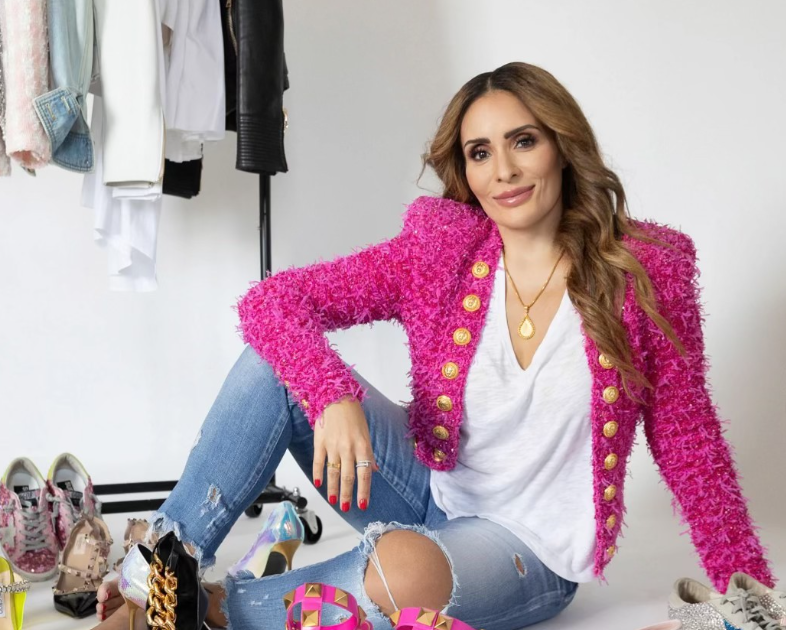
There are conversations that stay with me long after we stop recording, and my recent episode with Amy, founder of the luxury personal styling and image consulting brand Style Forward, is one of them. What started as a discussion about clothes turned into something so much richer: a conversation about identity, confidence, and the courage it takes to truly show up as yourself.

Why I Wanted Amy on the Show
I love Amy’s energy. If you know me, you know I believe energy and gratitude matter more than systems and processes when it comes to building something meaningful, whether that’s a business or a personal brand. Amy has that energy in spades.
But what drew me to her even more was realizing how much deeper her work goes than clothes alone. Her approach touches identity, self perception, and how we show up in every room we walk into, often before we even say a word. I knew this conversation was going to be special, and it was.
A Childhood Spent Observing, Creating, and Surviving
Amy grew up in Charleston, South Carolina, during the 1980s and 90s, in a place that wasn’t especially diverse at the time. As the daughter of Egyptian parents, she looked different from her classmates. She was also heavier than many of her peers and consistently at the top of her class, a combination that made her a target for bullying throughout her childhood.
Instead of trying to blend in, Amy turned inward. By high school, she had begun building something entirely her own: a personal style. She told me she had loved clothing since she was four years old, silently pointing to shoes in the aisles of Kmart, letting her choices speak before she had the words to explain them. Her mother, a seamstress, taught her about fabric, fit, and cut from an early age.
But it was in her teenage years, cutting pictures from mail order catalogs and piecing together her own outfits, that Amy discovered something most people never fully grasp: the way we dress is never just about the clothes.
“It was bigger than just the clothes,” she told me. “It was about what it did for my level of confidence and the identity that I was building for myself, without even realizing it.”
By the end of high school, classmates who had once been too intimidated to approach her were telling her how kind she was. The bullying hadn’t disappeared from her memory, but Amy had transformed her relationship with how she showed up in the world. That transformation became the foundation for everything that followed.
From Corporate Burnout to Building Something Real
Amy’s path wasn’t a straight line from passion to purpose, and I appreciated how honest she was about that. She spent years in a corporate career that looked successful from the outside. Internally, something never felt right. She described feeling like just another number, disconnected from any visible impact, pushing buttons without ever seeing what happened on the other side. I felt that one deeply.
She tried building businesses chasing income alone, and learned quickly that money without alignment doesn’t create fulfillment. It wasn’t until she was part of a mastermind group and was asked a simple but piercing question, what do people come to you for the most, that the answer arrived almost instantly for her: style.
That single moment of clarity opened doors that had previously felt locked. Amy described it the way I often describe finding alignment myself, like things stop feeling forced and start arriving with a kind of effortless momentum, the same way a relationship feels natural when it’s right.
More Than a Stylist: A Practitioner of Identity Work
What struck me most about Amy is her refusal to treat styling as surface level work. When people hear the word stylist, she told me, they often picture a salesperson at a department store helping someone pick an outfit for an event. That is not what she does, and it’s not who she is.
Amy incorporates neu
ro linguistic programming techniques into her client work, addressing the limiting beliefs and unresolved traumas that often sit quietly beneath someone’s relationship with their own image. She believes, and has seen repeatedly in her clients, that no wardrobe transformation can succeed if the person wearing it still sees someone unworthy in the mirror.
“All the beautiful clothes in the world aren’t going to help you if all you see in the mirror is someone you don’t like,” she said.
Her process isn’t built on formulas. She rejects the idea of universal style rules, insisting instead that every client’s authentic self must be uncovered and elevated, not replaced. A wardrobe should feel like an extension of someone’s identity, not a costume borrowed from someone else’s life.
The Power of Showing Up, Even When It’s Uncomfortable
One of my favorite parts of our conversation involved something deceptively simple: the decision to dress with intention, even when no one is watching, even when comfort would be easier.
Amy shared a story about a client who, almost on instinct, decided to dress up before a routine hair appointment instead of wearing her usual loungewear. That small decision led to a conversation with a stranger that turned into a significant business opportunity. Had she shown up looking less put together, that connection might never have happened.
Amy has lived this principle herself. She told me about the tinsel she has worn in her hair for three years, a small, personal signature that has opened conversations and connections she never could have predicted. People remember her. They approach her. They feel invited to ask questions they might otherwise keep to themselves.
I shared with Amy that I see this as a quiet form of leadership, the kind that doesn’t require a stage or a microphone, only the willingness to be visibly, unapologetically yourself.
Understanding the Person Behind the Style
Much of our conversation touched on how style must adapt not just to the individual, but to generational and cultural context. Amy spoke candidly about the challenge of styling clients across different age groups, particularly those who feel caught between not wanting to look outdated and not wanting to look as though they are chasing trends meant for someone decades younger.
To meet clients where they are, Amy immerses herself constantly in fashion across geographies and generations. She has traveled internationally, including a recent styling retreat in Italy, specifically to study how style differs across cultures and bring that global awareness back into her work. It is research in service of empathy, not trend chasing for its own sake.
A Mission Bigger Than Fashion
As we moved toward the end of our conversation, Amy opened up about her larger mission: helping people understand that clothing is never superficial. She is currently writing a book and hopes to begin speaking on stages, carrying her message to a wider audience.
Her goal isn’t simply to dress people well. It’s to help people understand that the way they present themselves to the world is deeply connected to how they feel internally, and that changing one can meaningfully shift the other.
“It really is a powerful tool for transformation,” she said. “I’ve lived it. I’ve experienced it myself.”
What I Took Away From This Conversation
This wasn’t a conversation about styling tips or seasonal trends, even though we touched on plenty of fun cultural moments along the way. It was a reminder that confidence is built, not inherited, and that the relationship between how we present ourselves and how we feel about ourselves runs deeper than most of us pause to consider.
Amy’s story, from a bullied teenager piecing together outfits from mail order catalogs to a sought after stylist helping clients rewrite their own internal narratives, is proof that the things we use to survive can eventually become the things that allow us to thrive, and to help others do the same.
If you want to connect with Amy or learn more about Style Forward, you can find her on Instagram or reach out directly by email through her website.
About me:
I am currently a Master Facilitator for The Elliott Group in addition to being on the board of advisors for our Cultural Transformation Department in ELLIOTT ARMY.
With over 14 years of client service experience, I have held substantial leadership roles in the automotive industry. I’m also an accredited coach, a speaker, a triathlon finisher, and a wife. To contact me for engagements, you can reach me at [email protected].
