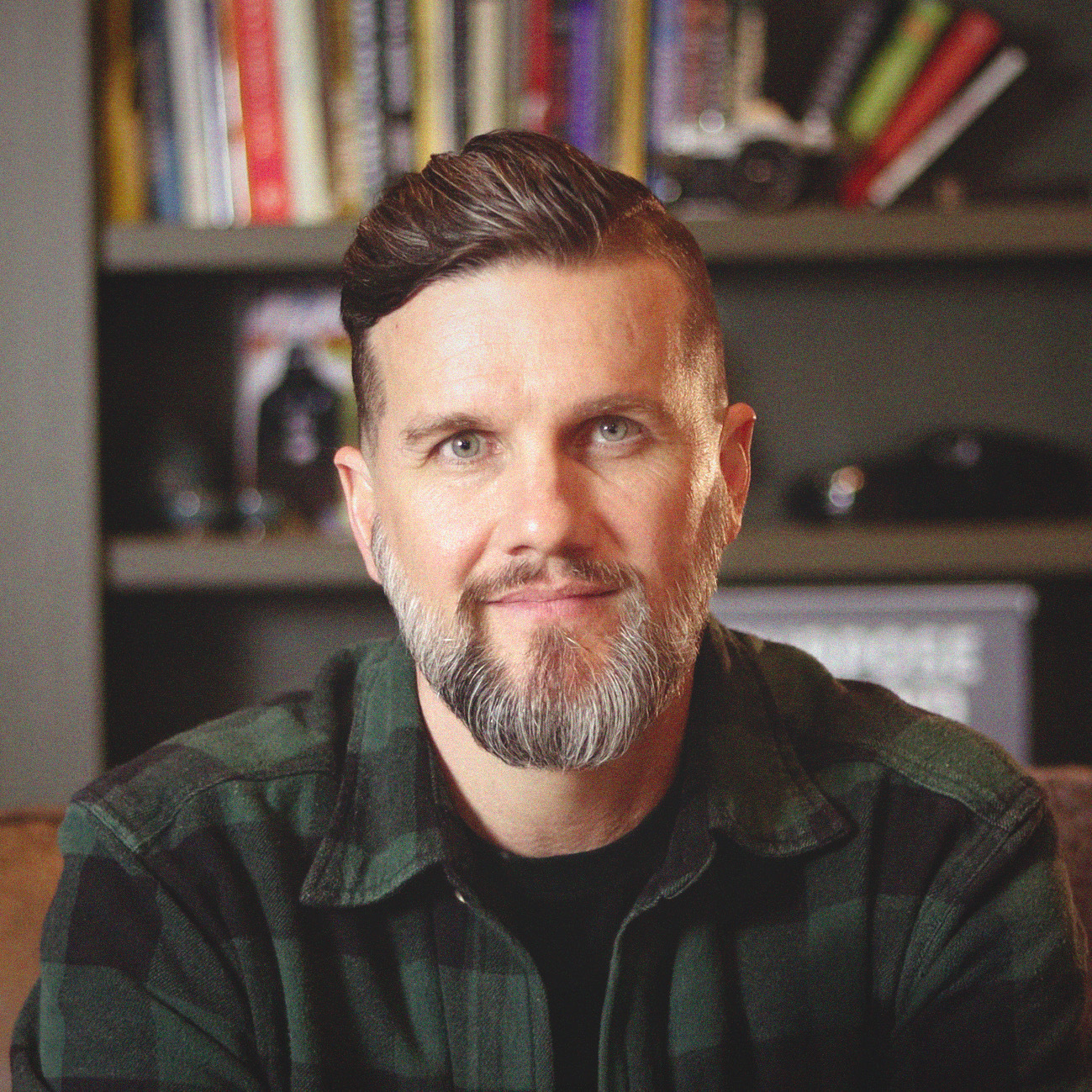
How To Build A Biblical Business
Adam Weisner is the author of Biblical Business, CEO of Sherman Research, and founder of Unbreakable OS. But long before any of those titles, he was an entrepreneur who spent years believing that faith and business belonged in separate rooms of his life. What he shared with me on this episode challenged that idea completely, and I think it will challenge yours too.

The Lie of Work Life Balance
Adam did not always see faith and business as connected. For most of his career, he kept them apart. Faith lived on the weekends and in private. Business was where the real work happened, or so he thought.
That changed about three and a half years ago when he joined a group called C12, a community of Christian business leaders who meet locally to talk about what they call business as a ministry. Sitting around a table with other leaders who loved both Jesus and business became the catalyst that reshaped his entire worldview.
The realization that hit him hardest was simple but profound: work is worship. Not a separate obligation sitting next to faith, but an expression of it.
Adam pushed back on the popular idea of work life balance entirely. He does not believe these things can be balanced against each other because they were never separate to begin with. You are one whole person. What you believe about life shows up in how you work, how you love your spouse, and how you raise your family. Trying to integrate them assumes they were ever divided, and Adam argues that assumption is a logical fallacy.
From CEO to Chief Stewardship Officer
One of the most striking shifts in Adam’s thinking was how he began to see ownership itself. He stopped viewing his business as his own and started seeing it as something entrusted to him.
He described his real role as chief stewardship officer. The business, his family, everything he leads, none of it belongs to him. It belongs to God, and his job is to steward it well. That shift did two things for Adam. First, it helped him fight the pride that so naturally creeps into leadership. Second, it gave him a way to call the people around him into something bigger than simply running a business.
This reframing led Adam to rebuild his company’s core values entirely around the fruits of the spirit found in Galatians 5: love, joy, peace, patience, kindness, goodness, faithfulness, gentleness, and self control. During annual reviews, he now asks his team to rate how well their leaders, himself included, demonstrate each of these qualities. He wanted accountability that went beyond output and touched something deeper, a spiritual and relational kind of accountability.

The Dispensable CEO and the Hot Dog Stand Effect
Adam’s philosophy of leadership flips a common entrepreneurial instinct on its head. Many business owners build companies that depend entirely on them. They become the salesperson, the decision maker, the problem solver, and the person everyone has to go through. Adam believes the real goal is the opposite: build a business that can thrive without you.
He introduced me to what he calls the hot dog stand effect. The idea is this: if you started a hot dog stand tomorrow, would people want to follow you into it? Would your team, your clients, your partners choose to walk away from stability and join you in something brand new, just because of who you are as a leader?
Adam’s answer is that you earn that kind of loyalty by giving first. Raises, promotions, benefits, time off, equity, profit sharing. You offer these things proactively, before people come asking for justification. Because at the core, what people want is to be known and loved, in that order. When you demonstrate that you know someone and you back it up with your time, talent, and treasure, you build people who want to be part of whatever you are building, no matter what it is.
Security That Doesn’t Come From Circumstances
I asked Adam how he manages to stay so calm, so secure in himself, even in high pressure moments. His answer came in three parts.
First, he credits his mother, a single parent who raised him while telling him he was amazing and capable of anything. He believed her, and that belief shaped his baseline confidence early on.
Second, he pointed to something counterintuitive: trauma and failure teach. The more you put yourself into high risk, high stress situations, the more opportunities you get to practice responding calmly. Adam calls this asymmetric response, the discipline of bringing calm energy when everyone else is spiraling up, and bringing energy up when everyone else is spiraling down.
Third, and most foundational for Adam, is understanding that he serves an audience of one. Once you deeply grasp a biblical worldview, the only opinion that ultimately matters is God’s. That does not give you license to behave recklessly. Instead, Adam described it as becoming attractive almost by accident, because the qualities you take on by seeking that relationship first are qualities other people are drawn to.
Choosing Obedience Over Outcomes
Perhaps the most personal moment of our conversation came when Adam described how he ended up on social media at all, something he had avoided for most of his adult life. He owns a screenless phone. He is not, by his own description, a social media person.
Then, on a specific morning last year, he woke up with an unmistakable sense of conviction: his pride was standing in the way of sharing what he had experienced with others. He described it as obedience being required, not optional. So he made a decision that day to start posting, without a content strategy, without a plan, simply as an act of obedience. He committed to planting and watering, and trusting that whatever happened next was not his to control.
A year later, he told me the results have been beyond anything he could have engineered himself, and he is careful not to take credit for it. One message from a mother, telling him that her son had become a leader at his school because of Adam’s content, was enough on its own to make the entire effort worth it to him.
Adam summed up this posture in a line that stuck with me: replace results with obedience.
Entrepreneurship Born From Necessity
Adam’s path into business did not start with a grand vision. It started with growing up with very little, raised by a mother who ran her own cleaning business and dragged her kids along to clean churches and offices before school. He learned sales as a survival skill, selling candy at school, working a cell phone kiosk in Walmart, making over a hundred cold calls a day early in his career.
That scrappy foundation shaped the entrepreneur he eventually became, someone who understands both the hustle of building something from nothing and the deeper conviction that the hustle itself has to be in service of something bigger than money.

A Life Built Around What Matters
Adam’s reflections on his marriage rounded out a conversation that touched every layer of what it means to lead a whole life well. He spoke about his wife with a kind of admiration that comes only from decades of partnership, describing her faith, her intelligence, her strength, and her willingness to challenge him honestly. Their relationship, built over many years, continues to shape how he leads both at home and in business.
Closing Thoughts
This conversation was a reminder that the real return on investment in business and in life rarely shows up on a balance sheet. It shows up in the culture you build, the people you become, and the willingness to trust something bigger than your own plans.
If you believe people are your greatest asset and relationships are your greatest investment, I hope this conversation encourages you the way it encouraged me.
About me:
I am currently a Master Facilitator for The Elliott Group in addition to being on the board of advisors for our Cultural Transformation Department in ELLIOTT ARMY.
With over 14 years of client service experience, I have held substantial leadership roles in the automotive industry. I’m also an accredited coach, a speaker, a triathlon finisher, and a wife. To contact me for engagements, you can reach me at [email protected].
