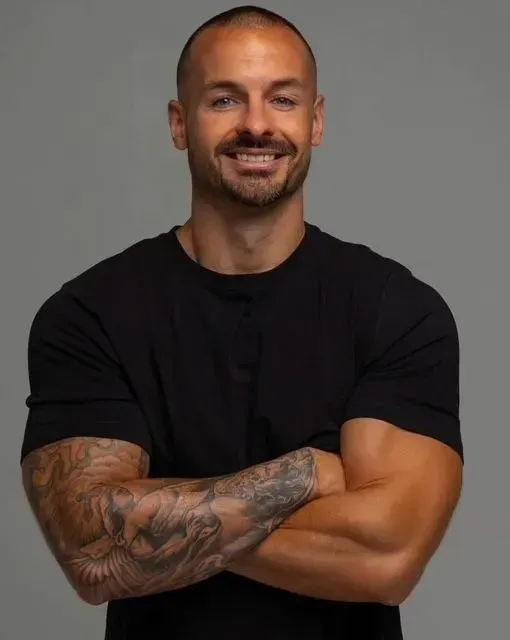
39 Minutes of Business Advice
There is a version of success that gets sold to us early. Climb the ladder. Hit the titles. Build the resume. And there is another version, quieter and harder to explain, that only shows up once you have already climbed a few rungs and realized the view was not what you expected. My guest this week, Jacob Smith, has lived both versions at once, and what he shared with me left me thinking about ambition differently.

Jacob spent more than sixteen years in operations and logistics. He started as a warehouse associate and worked his way up to vice president of operations, now overseeing multiple distribution centers, millions of dollars in inventory, and teams of more than fifty people. That climb alone would make for a compelling conversation. But what made Jacob’s story stand out to me was what he built quietly on the side, without telling a single person at work, for three years straight.
The Job That Taught Him What He Actually Loved
Jacob told me that logistics was never really the thing that lit him up. It was not the boxes or the pallets or the supply chain diagrams. What he discovered, almost by accident, was that the part of the job he loved most was investing in people. Training them. Advocating for them. Helping someone believe in a version of themselves they had not yet grown into.
He did not identify that passion right away. For a long time, it just felt like part of the job description. But as he moved higher into leadership, he realized that duplicating what he knew into other people, pouring into them personally and professionally, was the real driving force behind every promotion he earned.
Then came the moment a lot of high achievers eventually hit. He climbed the ladder, checked the boxes, and reached a level he once thought would feel like arrival. Instead, he felt like something was still missing. That gap is where his coaching business was born.
Building in Silence
For three years, Jacob posted daily on social media, coaching people through fitness, discipline, and mindset, all while keeping it completely separate from his corporate identity. He was traveling constantly for work, living out of hotel rooms, and still finding a way to show up for a second calling that nobody at the office knew existed.
I asked him why he kept it so hidden for so long. His answer was simple. He wanted to stay professional. He never wanted his coaching work to look like it was competing with what he owed his company. So he kept the two worlds in separate rooms, even as both of them were expanding.
Eventually the walls came down on their own. His company’s executive team discovered his social media presence, and instead of raising eyebrows, they lit up. They started asking him about macros, about nutrition, about the discipline behind his consistency. A few weeks before we recorded this conversation, Jacob stood in front of his C suite and walked them through a twelve slide deck of everything he had quietly built. He told me it felt surreal, presenting himself instead of a brand or a company, and having the people at the very top of his organization tell him they wished they had known sooner.

The Discipline That Started Long Before the Title
Jacob’s relationship with fitness did not start with his coaching business. It started in high school on the powerlifting team, where he set a world record in the deadlift at fourteen years old. He told me it was never really about aesthetics. It was about proving something to himself that no one could hand him and no one could take away.
He put it in a way I have not stopped thinking about. You can buy a nice watch. You can buy a nice car. But you cannot buy a fit body. That has to be earned through the version of discipline that shows up when nobody is watching, in hotel rooms with a food scale and a microwave, weighing out chicken and rice because the alternative on the road is usually a table full of bread.
That same discipline, he said, bled into everything else in his life. Self confidence. Self worth. The ability to look at himself in the mirror, quite literally, since he pointed out that a gym is a room full of mirrors, and face what needed to change instead of running from it.
What Coaching Taught Him That Corporate Never Could
One of the more honest parts of our conversation was when Jacob talked about the difference between leading in a corporate structure and coaching people outside of it. In the corporate world, there are parameters. There is a certain amount of polish required, a political layer you learn to navigate. Coaching stripped that away. It gave him room to be direct, even blunt, in ways that would never fly in a boardroom, and he found that people responded to that honesty far more than they responded to careful corporate language.
What fulfilled him most, he said, was watching transformation happen in real time. People coming to him looking to get sober. People looking to get in shape because, as he put it, those two goals often travel together. He told me you can either get under the bar or you can sit at the bar. One builds you. One breaks you down. Helping people choose the version that builds them, and watching them extinguish old pain through positive, repeated action instead of avoidance, became the thing that fueled him more than any title ever did.
Corporate Stability Versus the Entrepreneurial Leap
I wanted Jacob’s honest take on both sides of the fence, since he is one of the few people I have talked to who has genuinely lived in both worlds at a high level. He did not romanticize either one.
Corporate life, he said, gives you consistency. Stability. Health insurance. A predictable paycheck that lets you plan your life around something steady. That security is exactly why so many people stay.
Entrepreneurship is a different animal entirely. It is a bet on yourself with no guaranteed dividends. You might build something that never pays off. You might lose it all. And unlike a misstep in the corporate world, where there is often room to recalibrate and bounce back, a failure as an entrepreneur can be much harder to walk back from. He was clear that stepping fully into that path takes a specific kind of mental toughness, because ultimately, the entire outcome rests on your own shoulders.

The Marriage Behind the Momentum
Jacob spoke about his wife with a tenderness that stuck with me. They have been together for sixteen years and married for ten. He told me she was with him back when he did not have much to show for himself yet, before any of the titles or the milestones existed. She saw something in him before he could fully see it in himself.
When he first told her he wanted to build a coaching business on top of an already demanding corporate career, her only real concern was whether he could actually carry the load without letting anything else slip. He made sure he never complained about how heavy that load became. He stayed present. He stayed consistent. And he credits her belief in him, quiet and steady over all those years, as one of the biggest forces behind everything he has built.
Everybody Is Capable. Not Everybody Is Willing.
Toward the end of our conversation, I asked Jacob what he would want to leave with anyone listening, whether they were deep in the corporate world, building a business from scratch, or somewhere in between trying to figure out which direction to take. His answer was direct.
Everybody is capable. Not everybody is willing. He believes the limitations most people carry are the ones they place on themselves, and that any goal is achievable if someone is truly willing to put in the discipline and commitment required to become the kind of person who can carry it.
Jacob’s story is proof that you do not have to choose a single identity and abandon every other part of who you are. He built a demanding executive career and a coaching brand at the same time, in the margins, without letting either one consume the other. He did it quietly, without needing permission, and let the results speak before he ever needed to explain himself.
About me:
I am currently a Master Facilitator for The Elliott Group in addition to being on the board of advisors for our Cultural Transformation Department in ELLIOTT ARMY.
With over 14 years of client service experience, I have held substantial leadership roles in the automotive industry. I’m also an accredited coach, a speaker, a triathlon finisher, and a wife. To contact me for engagements, you can reach me at [email protected].
