
Your Subconscious Is Running the Show. It Is Time to Take Back the Remote.
Your Subconscious Is Running the Show. It Is Time to Take Back the Remote.
Master hypnotist Mark Yuzuik reveals how rewiring the stories we tell ourselves can create deep, lasting transformation from the inside out.

Have you ever caught yourself making the same mistake twice? Falling into the same patterns, choosing the same paths, and arriving at the same dead ends you swore you would never revisit? If so, you are not alone. And more importantly, you are not broken.
The truth is, most people are living their lives on autopilot. They wake up each morning believing they are in control, that their choices are deliberate and their actions intentional. But beneath every conscious decision lies a far more powerful force, one that has been quietly shaping behavior since childhood: the subconscious mind.
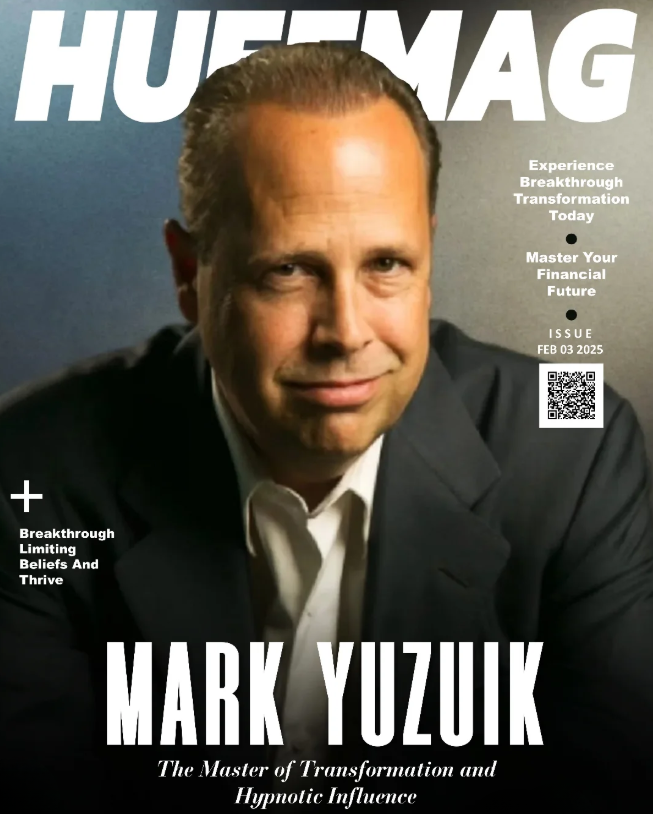
Mark Yuzuik has spent over 25 years dedicating his life to understanding and unlocking the potential of the human subconscious. A master hypnotist with a reputation that spans continents, he has worked with thousands of people from all walks of life, from executives and athletes to parents and students, each of them struggling against invisible mental barriers they could not quite name. What he has discovered in that time has fundamentally changed how the world understands human behavior, motivation, and lasting transformation.
“Your subconscious is not your enemy. It is an incredibly loyal servant, faithfully executing every belief and story you have ever given it, whether those stories serve you or not.” — Mark Yuzuik
The Hidden Autopilot You Never Knew You Had
According to Yuzuik, researchers estimate that as much as 95% of our daily behavior is governed not by conscious thought, but by subconscious programming. That means the vast majority of what a person does, says, and feels each day is being driven by patterns, beliefs, and emotional associations that were largely formed before they were even old enough to question them.
The way someone responds to criticism, the habits they struggle to break, the self-doubt that creeps in precisely when confidence is needed most. None of that is random. All of it traces back to deeply embedded subconscious stories that the mind has accepted as truth.
Yuzuik is careful to point out that the subconscious mind is not malicious. It does not want a person to fail. In fact, it is trying to protect them, doing exactly what it was programmed to do. The problem arises when those programs are outdated, rooted in fear, limitation, or experiences that no longer reflect the life a person is trying to build.
Why Willpower Alone Will Never Be Enough
Our culture places an enormous amount of faith in motivation and willpower. People are told to push harder, want it more, and summon the discipline to overcome whatever stands in their way. And for a while, that approach can work. But Yuzuik explains that it is temporary by design, because motivation operates at the conscious level, while the habits and patterns people most want to change are stored much deeper.
He often uses a powerful analogy to illustrate this point. Imagine trying to renovate a house by rearranging the furniture but never touching the foundation. You can move things around as much as you like, but if the structure underneath is cracked, nothing on the surface will hold. That is precisely what happens when someone tries to create change through willpower alone. They are decorating a faulty foundation.
“Real transformation does not happen when you force yourself to change. It happens when you make change feel natural, even inevitable, at the level of the subconscious mind.” — Mark Yuzuik
The Power of Rewriting Your Story
One of the most profound insights Yuzuik shares through his work is this: it is not the habit itself that makes change difficult. It is the story attached to it. Every behavior a person struggles to break is wrapped in a narrative, a set of beliefs about what that change will cost them, what it means about who they are, and whether they are truly capable of it.
He often points to smoking as a clear example. Most people who try to quit associate the process with deprivation, struggle, and loss. They brace themselves for discomfort while their subconscious screams that something is being taken away. No wonder the relapse rate is so high. The story being told is one of suffering.
Now imagine a different story. One where quitting smoking is associated not with loss, but with liberation. Where every moment without a cigarette feels like joy, vitality, and reclaimed identity. When the story is rewritten at the subconscious level, the entire emotional landscape of change shifts. What once felt like deprivation begins to feel like a gift.
What Hypnosis Actually Does
Hypnosis is one of the most misunderstood tools in the world of personal development, and Yuzuik has made it part of his mission to change that. Popular culture has painted it as a stage trick, something performed under spinning watches with theatrical flair. But the clinical hypnosis Yuzuik practices is something else entirely. It is a precise, evidence-informed method for accessing the subconscious mind and creating meaningful, lasting change at its source.
During hypnosis, the critical filter of the conscious mind is gently relaxed, allowing new ideas, beliefs, and emotional associations to be received directly by the subconscious. This is not about control or manipulation. It is about communication. It is simply speaking to the part of the mind that has the most influence over behavior, in a language it actually understands.
The results, Yuzuik says, can be remarkable. People who have carried limiting beliefs for decades find themselves released from them in a matter of sessions. Habits that felt impossible to break dissolve without the usual struggle. The transformation is not surface-level. It is structural, reaching all the way down to the foundation.
You Are Not Your Patterns
Perhaps the most important message Yuzuik shares is something simple but profound: a person is not their patterns. They are not their habits, their fears, or the stories that have been running in the background of their mind. Those things were shaped by experience, and what experience created, new experience can change.
No matter how long someone has been living a certain way, no matter how many times they have tried and felt like they fell short, the capacity for transformation is always within reach. The subconscious mind is not a locked vault. It is a living, responsive system, and with the right approach, it can be reprogrammed to support the life a person actually wants to live.
“The door to change is always open. You just have to learn how to knock on it from the inside.” — Mark Yuzuik
The question is not whether the mind can change. It absolutely can. The question is whether a person is willing to meet it where the change actually happens.
Tag someone who needs to hear this. The conversation started today might be the one that changes everything.
About me:
I am currently a Master Facilitator for The Elliott Group in addition to being on the board of advisors for our Cultural Transformation Department in ELLIOTT ARMY.
With over 14 years of client service experience and have held a substantial leadership roles in the automotive industry. I’m also an accredited coach, a writer, speaker, and a triathlon finisher. To contact me for engagements you can reach me at [email protected].
