Leading with Faith: Why People Matter More Than Numbers
Leading with Faith: Why People Matter More Than Numbers
Lessons on retention, relationships, and what really matters from Skyler Martin, MBA.

In business, we’re taught to measure everything. Revenue growth. Customer acquisition costs. Churn rates. Employee productivity. The numbers tell us whether we’re winning or losing, whether we’re on track or falling behind. But what if our obsession with metrics is causing us to miss the most important measurement of all?
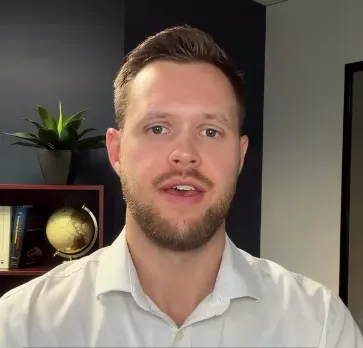
Today, I sat down with Skyler Martin, MBA, someone who’s built his entire approach to leadership on a different foundation. For Skyler, the most important things we steward in life aren’t just numbers, but people. It’s a simple statement, but the implications are profound, especially in a world that often treats people like resources to be optimized rather than relationships to be nurtured.
The Foundation That Holds Everything Together
Skyler is deeply rooted in faith and family, and he brings those values into every relationship he builds, whether personal or professional. His philosophy is straightforward but powerful: when your foundation is strong — your faith, your integrity, and your commitment to the people you love — everything else in life aligns the way it’s supposed to.
This isn’t about hoping things work out. It’s about building from a place of strength that doesn’t shift with market conditions or quarterly pressures. When you’re anchored in something deeper than performance metrics, you make different decisions. You treat people differently. You lead differently.
Most leaders talk about values. Skyler lives them. His faith isn’t something he parks at the door when he enters the office. It’s the lens through which he sees every interaction, every challenge, every opportunity. And that consistency creates trust in ways that no mission statement on a wall ever could.
What Leading with Faith Actually Looks Like
The phrase “leading with faith” can sound abstract, even intimidating. But in our conversation, Skyler made it tangible. Leading with faith means showing up as your whole self, acknowledging that you don’t have all the answers, and trusting in principles that transcend immediate circumstances.
It means choosing honesty over convenience, even when the truth is uncomfortable. It means investing in someone’s growth when the payoff isn’t immediately visible. It means having the courage to prioritize what’s right over what’s easy or profitable in the short term.
In practice, this looks like taking the time to really know the people you work with, not just their output. It looks like making space for vulnerability and treating mistakes as opportunities for growth rather than reasons for punishment. It looks like building a culture where people feel valued for who they are, not just what they produce.
Leading with faith also means recognizing that you’re not in control of everything, and finding peace in that reality rather than anxiety. There’s a humility that comes with this approach, a willingness to serve rather than dominate, to guide rather than dictate.
How Family Shapes the Decisions We Make

One of the most powerful parts of our conversation centered on family and its influence on leadership. For Skyler, family isn’t separate from work — it’s the context that gives work meaning. The values he learns at home inform the decisions he makes everywhere else.
Family teaches us lessons that business schools often overlook. It teaches patience, because meaningful growth takes time. It teaches commitment, because you don’t abandon people when things get difficult. It teaches forgiveness, because perfection is an illusion and everyone needs grace. It teaches the long view, because the relationships that matter most aren’t built in sprints.
When you lead with a family-first mindset, you naturally shift from transactional thinking to relational thinking. You stop seeing employees as resources and start seeing them as people with lives, families, dreams, and struggles of their own. You recognize that the decisions you make about workload, culture, and expectations ripple out into homes and dinner tables and bedtime routines.
This perspective changes everything. It makes you more careful with people’s time. More thoughtful about the environment you’re creating. More willing to make sacrifices in the short term to protect what matters in the long term.
Relationships Over Results: The Retention Paradox
Here’s where Skyler’s philosophy connects directly to retention, both in life and in leadership. We typically think about retention as an outcome — something we achieve through the right strategies and tactics. But Skyler flips this on its head. He suggests that retention isn’t the goal; it’s the natural result of prioritizing relationships over results.
This sounds counterintuitive. Don’t we need to focus on results to succeed? Isn’t that the whole point of business?
But consider this: when you prioritize relationships, you create an environment where people want to stay. Employees stick around not because of retention bonuses or fear of change, but because they feel valued and connected. Customers remain loyal not because of switching costs, but because they trust you and feel cared for. Partners continue working with you not out of contractual obligation, but because the relationship itself has value.
The paradox is that when you stop chasing retention as a metric and start investing in genuine relationships, retention often improves naturally. People can sense when they’re being managed versus when they’re being valued. They know the difference between a company that talks about people as its greatest asset and one that actually treats them that way.
The Power of Consistent Presence
Skyler emphasized something that resonates deeply: true retention comes from showing up consistently, living your values, and serving others well. Not just when it’s convenient. Not just when you need something. But consistently, day after day, in ways both big and small.
Consistency builds trust. And trust is the currency that matters most in any relationship that’s meant to last. When people know they can count on you — to be honest, to be fair, to care about their wellbeing, to stand by your principles — they invest themselves more fully in the relationship.
This applies whether you’re leading a team, building a business, raising a family, or nurturing a friendship. The relationships that endure are the ones where someone shows up, not perfectly, but faithfully. Where integrity isn’t situational. Where commitment isn’t conditional.
In a world of shortcuts and hacks and growth-at-all-costs mentality, there’s something revolutionary about simply being consistent. About meaning what you say. About treating people the same in private as you do in public. About letting your yes be yes and your no be no.
Serving Others as the Ultimate Strategy
Perhaps the most compelling aspect of Skyler’s approach is the emphasis on service. In an age where leadership is often equated with vision-casting and decision-making from the top, he offers a different model: leadership as service.
When you serve others well, you’re not thinking primarily about what they can do for you. You’re thinking about what you can do to help them succeed, grow, and thrive. You’re removing obstacles rather than creating them. You’re empowering rather than controlling. You’re building people up rather than using them up.
This servant-hearted approach to leadership creates loyalty that can’t be bought. It generates effort that can’t be mandated. It builds culture that can’t be faked. Because when people feel genuinely served and cared for, they reciprocate naturally. Not out of obligation, but out of authentic appreciation and desire to contribute.
The Long Game
Everything Skyler shared points to one overarching truth: the things that matter most can’t be rushed. Long-term impact isn’t created through quarterly heroics or viral moments. It’s created through the accumulation of daily choices to prioritize what’s right over what’s easy, what’s meaningful over what’s measurable.
Building a strong foundation takes time. Developing deep relationships takes time. Living with integrity when no one’s watching takes time. Serving others without keeping score takes time. But this is precisely what creates lasting impact, the kind that outlives campaigns and initiatives and even careers.
In retention terms, this means thinking beyond the next renewal or the next performance review. It means investing in people’s growth even when they might leave. It means creating value that extends beyond transactions. It means building something that matters whether or not it maximizes short-term returns.
A Different Kind of Success

As I reflect on my conversation with Skyler, I’m struck by how his definition of success differs from the conventional narrative. He’s not primarily concerned with building the biggest organization or achieving the highest margins or earning the most impressive title. He’s concerned with being faithful to his values, honoring his commitments, and leaving people better than he found them.
This doesn’t mean he’s not ambitious or that results don’t matter. Rather, it means his ambition is directed toward things that last. His definition of results includes transformed lives, strengthened relationships, and positive influence that ripples out in ways that can’t always be tracked.
There’s a freedom in this approach. When you’re not constantly trying to prove your worth through metrics, you can focus on actually creating worth. When you’re not obsessed with appearances, you can invest in substance. When you’re not chasing validation from external sources, you can remain grounded in your internal compass.
The Challenge for Leaders Today
Skyler’s perspective presents a challenge for anyone in a position of influence. It asks us to examine our foundations. To question whether we’re stewarding people or just managing numbers. To consider whether our leadership would look different if faith, family, and relationships were truly at the center.
It’s an invitation to lead with more courage — the courage to prioritize long-term relationships over short-term results. The courage to be consistent even when it’s costly. The courage to serve when you could dominate. The courage to trust in principles that transcend profit.
This kind of leadership won’t always be celebrated in quarterly earnings calls. It might not generate the flashiest headlines or the fastest growth. But it creates something more valuable: organizations where people want to stay, cultures where people can thrive, and legacies that actually matter.
True Retention
At its core, this conversation with Skyler was a reminder that true retention — whether we’re talking about employees, customers, or any relationship that matters — comes from showing up consistently, living your values, and serving others well.
It’s not about manipulation or incentives or clever tactics. It’s about being the kind of person and building the kind of environment that people don’t want to leave. It’s about creating value that goes beyond transactions and building trust that withstands challenges.
When your foundation is strong, when you lead with faith, when you prioritize people over numbers, something remarkable happens. Not always immediately. Not always in ways that are easy to measure. But over time, consistently, relationships deepen. Trust grows. Impact multiplies.
And that’s retention that actually lasts.
About me:
I am currently a Master Facilitator for The Elliott Group in addition to being on the board of advisors for our Cultural Transformation Department in ELLIOTT ARMY.
With over 14 years of client service experience and have held a substantial leadership roles in the automotive industry. I’m also an accredited coach, a writer, speaker, and a triathlon finisher. To contact me for engagements you can reach me at [email protected].
