Hate Your Job? Lost Your Job? It Might Be Time To Reimagine What’s Next.
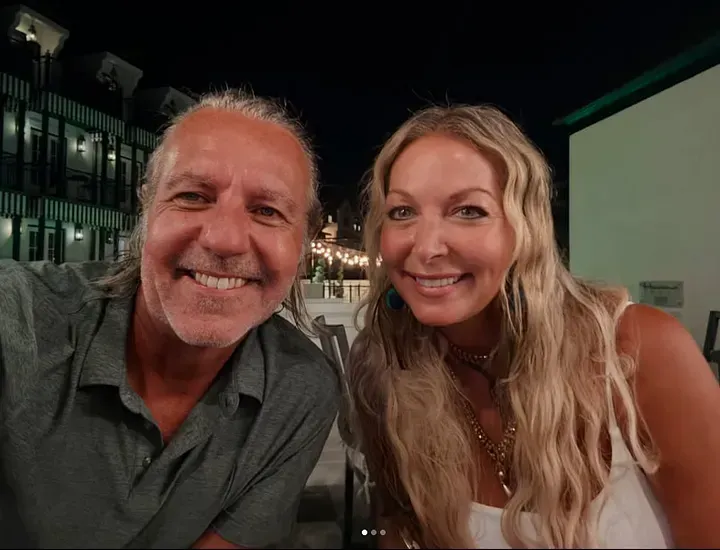
There are guests who come on the show to tell me about their business, and then there are guests like Bryan and Shannon Miles, who ended up teaching me something about how to live. By the end of our conversation I was taking notes not just for my listeners, but for myself.
Bryan and Shannon have been married for almost thirty years. They built BELAY together from nothing during the Great Recession, grew it into a company generating more than a hundred million dollars in revenue, and then did the part almost nobody talks about. They figured out how to let it go. Not the marriage. The business. And somehow that letting go became the whole point of their story.

How It Started: A Bridge, a River, and a Leap of Faith
Long before there was a business, there were two college kids at a small liberal arts school in central Ohio. Shannon was a freshman. Bryan was a junior, two years older. A mutual friend introduced them, and Bryan knew almost instantly that something was different about her.
Their first real date was bridge jumping, which Bryan described as simply what you did in a small Ohio town in the mid nineties. No apps, no social media, just a group of friends and a river. Bryan climbed to the highest point, about forty feet up, with Shannon right behind him. They sat there for a while, legs dangling over the edge, before Bryan turned to her and said something like, if I do not make it, I just want you to know I really like you. Then he jumped and left her standing there.
Shannon was not about to climb back down after a line like that. She jumped in after him, and as she put it, that was the beginning of their relationship. They have been taking risks together ever since.
What struck me most was how they described their differences. Every personality assessment they have ever taken comes back nearly opposite. Where that might create friction in some marriages, Bryan and Shannon found a kind of harmony in it, the push and pull of two different forces that somehow made them stronger as entrepreneurs. Shannon put it beautifully. She said the person Bryan married at nineteen is not who she is in her late forties, and the man Shannon married is not who Bryan is at fifty one. You have to accept that the person you are married to will keep changing, probably every decade, and commit to that person anyway.
The Leap Into Entrepreneurship
Long before BELAY, Bryan and Shannon tried and failed at a mortgage company with some friends. It never got off the ground because they never fully committed to it, never left their day jobs to give it a real shot. But the seed had been planted.
By 2010 they were both restless in their corporate roles. Shannon felt her position evolving in a direction that no longer fit her. Bryan had hit the ceiling on how far he could climb in his organization. They had talked for years about building something of their own, and somewhere along the way they had learned what it meant for a business to function as an asset rather than just a job.
So they made the decision. They incorporated that summer and quit their jobs on October 1, 2010, submitting their resignations forty five minutes apart. Unemployment nationally sat at 9.6 percent. They had two young kids at home, a two year old and a five year old, and they cashed out the entirety of their 401k, one hundred sixty thousand dollars, to fund the company that would become BELAY.
Bryan called it the scariest thing they had ever done. Shannon still remembers the exact date without hesitation. It is burned into their memory.
Freedom Was the Real Motivator
Here is what surprised me most. Bryan and Shannon did not start BELAY chasing a hundred million dollars. They started it chasing freedom. Bryan’s previous job had him traveling constantly, and their son, then two years old, barely had a relationship with his father outside of weekends. They looked at that life and knew it was not the foundation they wanted to build their family on.
That very first summer, even with the company barely off the ground, they packed up their kids and drove from Georgia to Wyoming. It was during that trip that the business received its first major validation. Michael Hyatt became a client, at a time when almost nobody understood what a virtual assistant even was. There was no domestic industry for it yet. Having someone credible in the marketplace vouch for what they were building changed everything for BELAY in its earliest, most fragile days.
Shannon reflected on that moment as a lesson in letting go and trusting that there is more at play than just your own hard work. For two ambitious, high achieving people, that was not an easy thing to learn. But it shaped how they built everything that came after.

Own It, Do Not Just Run It
One phrase kept surfacing throughout our conversation. Own, not run. Bryan and Shannon spent ten years building BELAY before stepping away as co-CEOs in 2020, appointing a CEO who had been with the company since its earliest days, and moving to the board. That was the first time in their lives they had truly owned a business rather than operated one day to day.
Now, with their brewery and distillery, NoFo, they find themselves doing the reverse. Shannon is transitioning into the CEO role, stepping back into daily operations after years of sitting one level removed. She called it the opposite of their normal trajectory, and she has genuinely enjoyed leading a team directly again rather than through an intermediary.
Bryan spoke with real warmth about watching Shannon step into this season. He talked about her insight as a leader, her thoughtfulness in how she communicates, and the early decisions she has already made that will shape where the business goes. Shannon was quick to redirect credit back to Bryan, whose strengths in finance, marketing, and sales are just as essential to what NoFo needs right now. Neither of them wanted to claim this chapter alone. It is, as Shannon said, still us together.
Why They Chose Distribution Over More Taprooms
One of the more strategic parts of our conversation centered on growth. NoFo currently operates three brewery locations across Georgia, with distribution reaching into Tennessee and Florida, and a sponsorship with the Chattanooga Football Club. Part of why Bryan and Shannon parted ways with their previous CEO came down to a difference in appetite. He was built for aggressive taproom expansion. They were not willing to keep injecting the capital that path would require, since they had self-funded the business from day one.
Instead, their growth strategy leans into distribution, building relationships through distributor sales teams who place NoFo products in restaurants and retail accounts, alongside a Spirit Smart program. Bryan pointed out that a flagship taproom still matters as the place where the brand’s story began, but real scale for a company like theirs comes from pushing harder into distribution.
Building a Brand People Actually Belong To
What makes NoFo work, according to Bryan, is not really the beer or the spirits, even though the products themselves are award winning. It is hospitality. It is the feeling of walking in and being remembered. Members carry mugs marked with their own numbers, and staff recognize a car pulling into the parking lot before the person even reaches the door.
Bryan described the mission behind the name NoFo, which stands for North Forsyth, the county where they live. The world did not need another brewery. It needed a place for meaningful connection. That distinction guided everything, from the design of their spaces to the collaborations they run with industry partners to adjust flavor profiles based on what their community actually wants.
He talked about culture as something that extends far beyond employees, shaping vendor relationships and customer experience alike, used deliberately as a filter for who they hire and who they do not. Shannon added that community is what people are ultimately looking for, whether that shows up as choosing a local coffee shop while traveling or wearing a NoFo shirt on a hike in Colorado.
Taking Care of the People Behind the People
Some of the most moving parts of our conversation had nothing to do with strategy at all. Bryan and Shannon talked about how hard hospitality jobs really are, the emotional labor of remembering names and creating warmth for strangers all day, often with no one doing the same for you in return. Something as simple as covering a drink for an employee after a twelve hour shift, they said, goes a long way.
That care extends to the families behind their team members too. The people supporting an employee outside of work hours matter just as much as the employee’s performance during them. It was a lovely parallel to something I had done myself recently, writing letters to employees’ parents and kids to let them know how much their family member means to the company. Small, unscalable gestures like that are often the real difference between a business people work for and one they belong to.
ONR: Building a Safe Harbor for Business Owners
Eventually our conversation turned to ONR, the nonprofit Bryan and Shannon founded through their family’s foundation. It started because they had mentored individuals and couples for years but reached a point where demand outpaced their time. Rather than turning people away, they decided to package everything they had learned building and scaling BELAY to exit into content anyone could access for free.
What they discovered along the way was something they suspected but had never fully confirmed. Most business owners are lonely and isolated. They need a safe harbor, a place to process what has gone unprocessed and work through it alongside people who understand exactly what they are carrying, because their families are not in the business with them and their friends do not run companies of their own.
ONR sits deliberately between paid consulting and the endless stream of unverified advice on social media. It offers a free ninety minute documentary and three seasons of episodes, each around thirty minutes, unpacking a personal and professional principle. They are also launching a cohort, guided by their executive director, working through the season one content alongside a companion guidebook, built specifically for business owners in the early stages who rarely have an extra hour in the week but need community to actually follow through.

The Advice That Stuck With Me
As we wrapped up, I asked Bryan and Shannon what advice they would leave behind. Bryan, who describes himself as someone who is not naturally a risk taker, said he has learned over the years that he would always rather take the risk than live with the regret of not taking it. Calculated, yes, but never so cautious that fear wins.
Bryan mentioned something a friend of theirs likes to say. If you want the biscuit, you have to risk it. He was quick to point out that risk in business is never a single event. It is iterative. It is ongoing. It is the discipline of assessing opportunity again and again and being brave enough to jump anyway, whether that is in the early scramble of a startup or years into a mature company.
Shannon connected it back to something even more personal. Marriage itself, she said, is the biggest risk any of us ever take. You cannot control every variable. You simply believe in something enough to take the leap and commit to the work of making it succeed.
Closing Thoughts
I came into this conversation expecting to talk about a hundred million dollar exit story. I left thinking about a couple who jumped off a bridge together thirty years ago and have been choosing each other, and choosing risk, ever since. Bryan and Shannon Miles built something extraordinary in BELAY, and they are quietly building something just as meaningful now, a place for other founders to feel less alone.
If any part of this resonated with you, I would encourage you to look into ONR and the resources they have made available to business owners at every stage. And if you are sitting on the edge of your own bridge right now, deciding whether to jump, let this be your sign.
About me:
I am currently a Master Facilitator for The Elliott Group in addition to being on the board of advisors for our Cultural Transformation Department in ELLIOTT ARMY.
With over 14 years of client service experience, I have held substantial leadership roles in the automotive industry. I’m also an accredited coach, a speaker, a triathlon finisher, and a wife. To contact me for engagements, you can reach me at [email protected].
