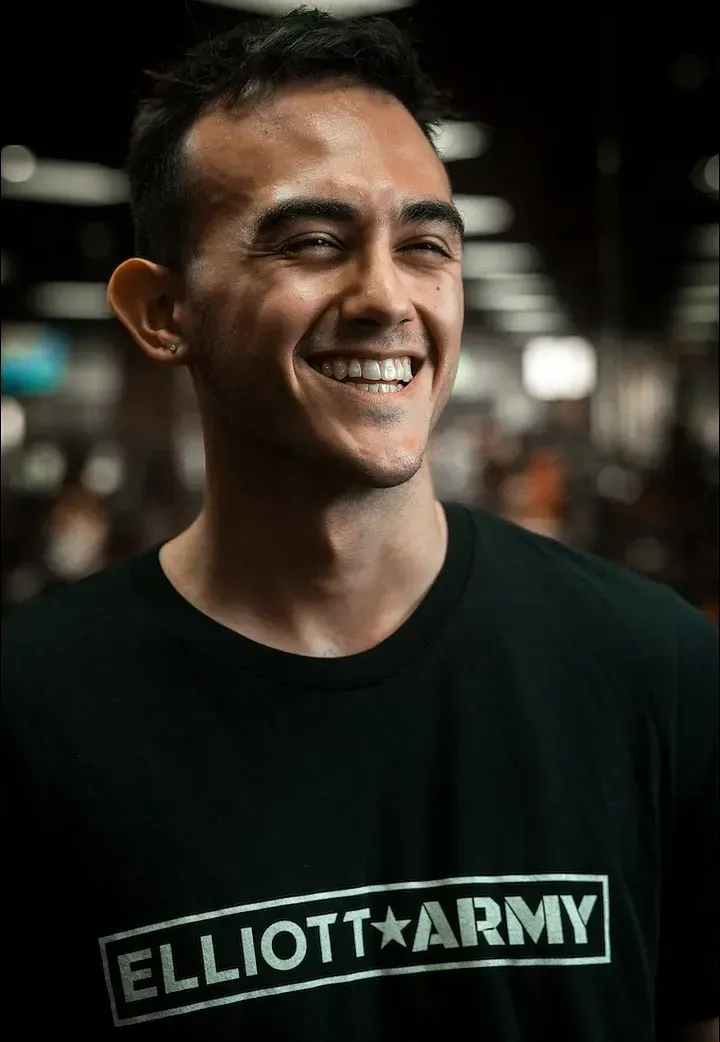
ELLIOTT ARMY SERIES: Don’t Get Stuck in the Negatives
Sean Sanabria was 19 years old when he first searched YouTube for sales training. He had no money, felt like he was “dying,” and had just made the decision to change his life. That search led him to Andy Elliott, who at the time had fewer than 4,000 subscribers. A few years later, Sean became one of the first people Andy ever hired.
Now in his mid-twenties, Sean has been inside the Elliot Group longer than almost anyone. He has traveled the country documenting businesses as Andy’s videographer, competed in and won the organization’s first-ever objection handling contest, and transitioned into a full sales role. Along the way, he has watched the company explode, seen some of its founding members walk out the door, and spent the better part of his early adult life figuring out who he actually is.
What follows is drawn from a wide-ranging conversation about identity, family, legacy, and one of Sean’s most unflinching beliefs: that America does not have a work problem. It has a thinking problem.
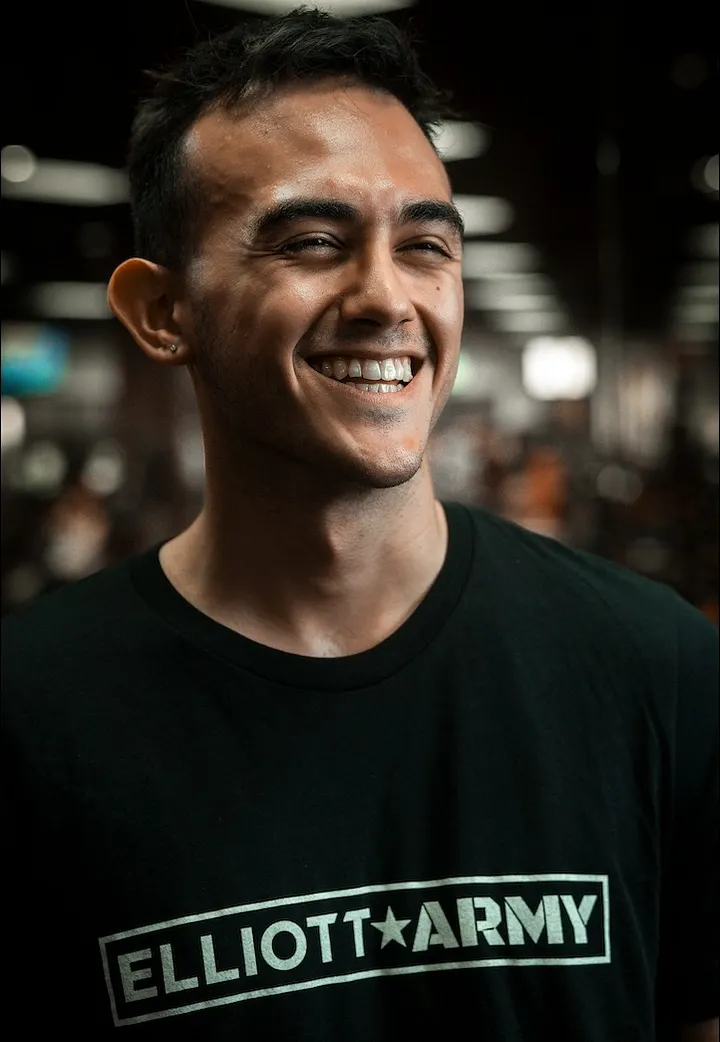
On Finding Andy When He Had 4,000 Subscribers
Sean didn’t come from a world of sales or entrepreneurship. He graduated high school in 2020, right in the middle of the pandemic, and by the end of that year he was staring at himself in a mirror, underweight, broke by Monday every week, and feeling, in his words, like something was very wrong.
“I looked in the mirror and I was like, I can’t be this way anymore. I feel like I’m dying.”
He searched YouTube for how to sell cars, applied to dealerships on Indeed, and that’s how he stumbled onto Andy Elliott. No warm introduction. No referral. Just a young man trying to figure out how to stop being broke.
That origin story matters because it shaped everything about how Sean thinks. He wasn’t handed an opportunity. He had to go looking for it. And what he found, he held onto.
“Even to this day, still being a part of the build feels just as special as when I got hired. I don’t regret any of the hours, the sleepless nights, all the stress. It’s been a really beautiful journey.”
On Identity: The Hardest Work He’s Done
Spend enough time inside any organization, especially one with a dominant figurehead and a high-performance culture, and the risk is that you start to lose the thread of who you are outside of it. Sean is unusually honest about this.
For the first three and a half years of his career, he was, by his own admission, completely absorbed. He didn’t take a gap year. He didn’t wander. He didn’t have what he calls that “period where I was like finding myself.” He went from 19 to the Elliot Group and didn’t come up for air.
“I’ve struggled with my identity up until probably about last year. Not struggle like I have a bad identity. More so being less one-dimensional in other areas of my life besides business, besides sales, besides Elliot.”
He describes the breakthroughs as recent and ongoing. He reads philosophy. He plays pickleball. He spent years gaming at a near-competitive level. He thinks of himself as a Renaissance man in the Andy Elliott sense of the term: not one-dimensional, interested in the big questions, drawn to depth over performance.
What changed? Partly time. Partly awareness. Partly a trip to Tony Robbins’ Date with Destiny in December 2025, where he started to understand his desire to help others as something rooted in his own need for healing.
On Healing, Legacy, and the Family He Plans to Build
Sean was raised in a home shaped by divorce. His biological father wasn’t present in a meaningful way. His mother was focused on her own healing. His stepfather, in his telling, wasn’t a good influence. None of this is said with bitterness. It’s said with the clarity of someone who has spent real time understanding how his past formed him.
“I always just had this desire to do it right. To heal it. Even since I was very young, I’ve always wanted to be a dad. I’ve always wanted to be a husband.”
He talks about legacy the way people do when they’ve actually thought about what happens after you’re gone. You don’t take the money. You don’t take the house. The only thing that persists is what you gave away.
He wants ten kids. He is not joking about this. He sees family as mission-critical, in roughly the same way he sees business.
“The only thing we leave are the things that we gave. We don’t keep the money. We don’t keep the place we live in. All we leave behind is everything we give out of the tank.”
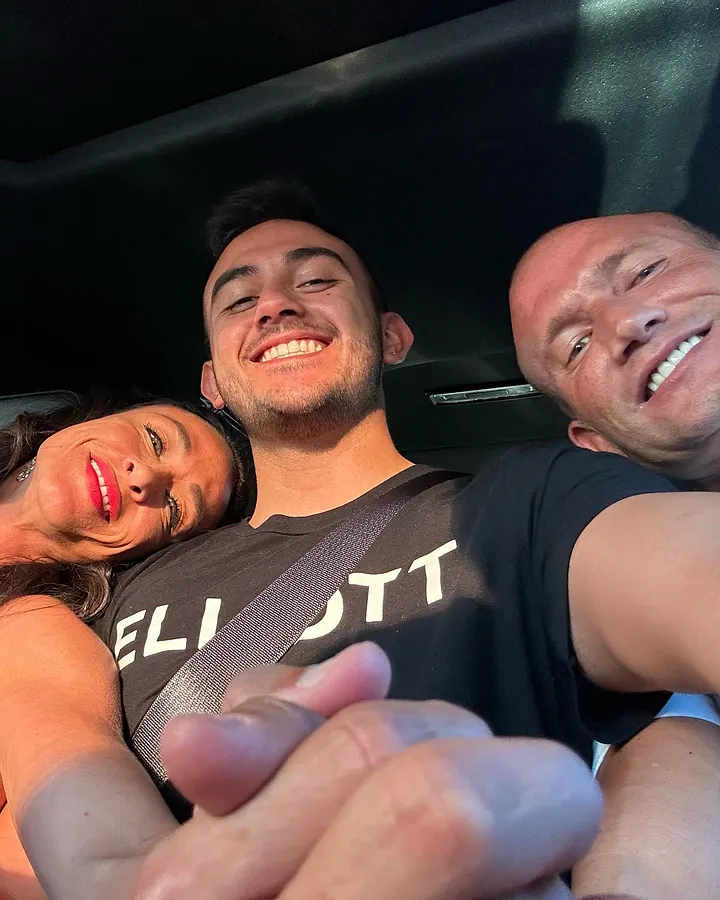
On What Makes a Brand Feel Human
Ask most coaches or trainers what experience they most want people to have, and they’ll say something about transformation or breakthrough. Sean’s answer was different.
He talked about parties. About gatherings at people’s houses before and after seminars. About the time he spent nearly $6,000 of his own money on an Airbnb and food from Costco during a David Goggins event. Pizza. Pasta. Hot dogs. Hamburgers. Juice boxes.
Nobody required him to do that. No job description included it. He did it because he believes people need to see the human side of the coaches and brands they admire, and because contribution, in his view, matters more than consumption.
“I’ve been to other people’s events and they would never do anything like that. It’s like a ‘what’s in it for me’ mindset. And I think contribution is so important.”
The Costco run was, in his framing, also an act of identity. A statement about who he is and how he wants to show up.
On What He Wants to Be Known For
Sean’s answer to this question is disarmingly simple: the most honest guy in the room.
Not the most successful. Not the most decorated. Not the top performer, even though he is one. He wants people to feel like they could show up around him without performing. Without auditioning for his time. Without softening the truth of how their life is actually going.
“I want to be known as the most real, authentic guy that ever lived. The only way to set yourself free is by telling yourself the truth and being honest and living that out consistently, day after day.”
He is, by his own description, an introverted intellectual who presents as extroverted and energetic. He is more interested in understanding where people are than in selling them something. He wants people to find out who they actually are, and he believes the best way to help them do that is to create space where they don’t have to pretend.
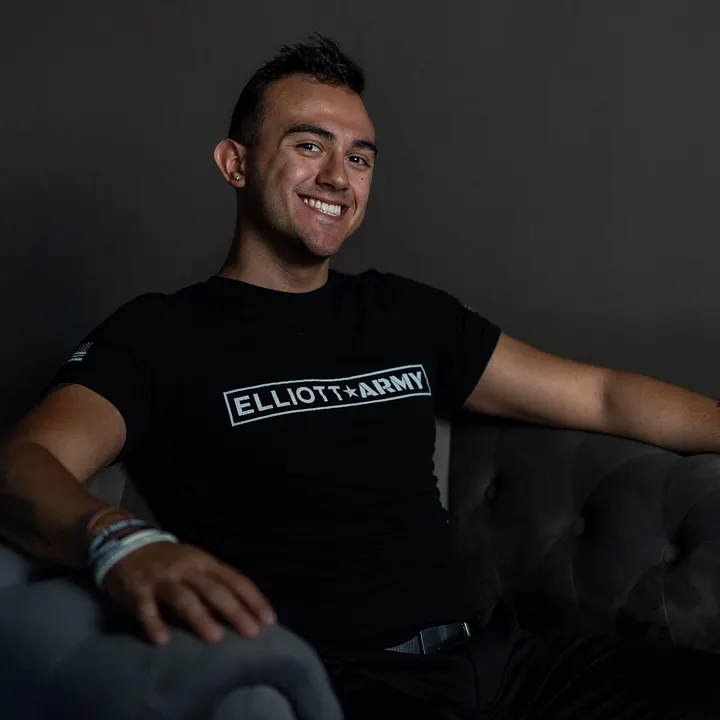
On the One Thing He Believes America Gets Wrong
Sean’s advice to anyone, regardless of age, industry, or background, comes down to a single conviction: we don’t have a work ethic problem in this country. We have a thinking problem.
“In America, I believe we don’t have a working problem. I believe there are many young, old, able-bodied, excited people ready to put in the effort. What I think we have is a thinking problem.”
His argument is that most people never learn how to actually use their minds. They look left, look right, see what everyone else is doing, and assume that’s the path. They don’t stop to ask whether what they’re doing is what they should be doing. They don’t ask better questions.
And better questions, in Sean’s framework, are the whole game.
“If you can learn to perceive information, think about it, then act with wisdom, you can do whatever you want in life.”
About me:
I am currently a Master Facilitator for The Elliott Group in addition to being on the board of advisors for our Cultural Transformation Department in ELLIOTT ARMY.
With over 14 years of client service experience, I have held substantial leadership roles in the automotive industry. I’m also an accredited coach, a writer, a speaker, and a triathlon finisher. To contact me for engagements, you can reach me at [email protected].
