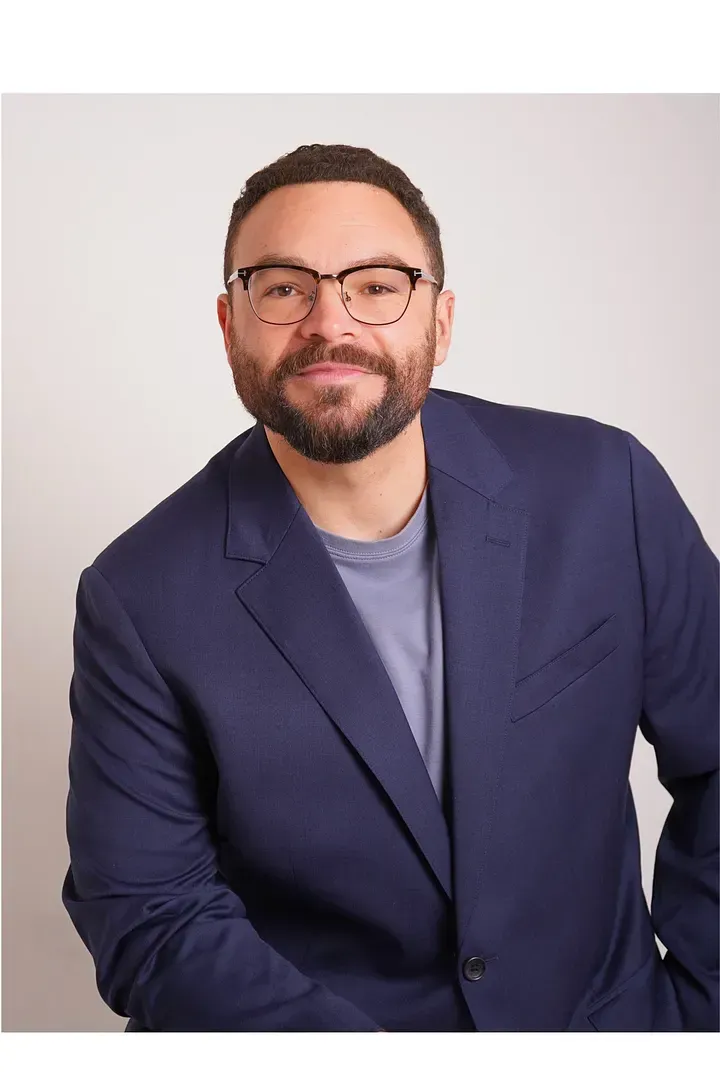
Start Looking for Other Opportunities Around You
By the time Arthur Ballesteros turned 40, he had already lived several lifetimes. He was a class clown, an actor, a musician, a stand-up comedian, a radio host, and a producer. But none of those titles came close to capturing the most important role he would ever step into: father.
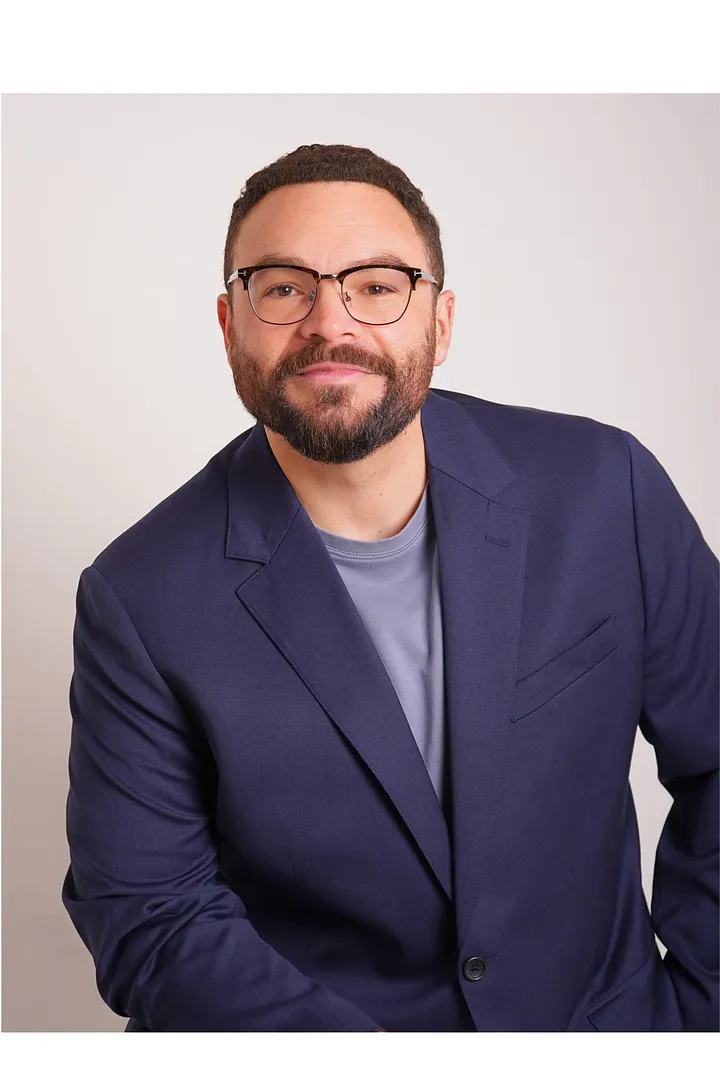
The Man Who Never Fit the Mold
Arthur Ballesteros was never meant to be ordinary. Growing up with what he describes as “eccentric parents” who encouraged him to think freely and embrace his peculiarities, Arthur spent his childhood doing exactly that. He was the kid acting out entire movies for his family, the teenager who gravitated toward stages, and the young adult who eventually channeled all of that restless energy into standup comedy and radio.
It was not until much later in life that he discovered much of that intensity had a name: ADHD. But by then, he had already learned to work with it, and more importantly, to work through it.
What makes Arthur remarkable is not the list of careers he has pursued. It is the unshakable sense of self that has threaded through all of them. He has never spent much time worrying about how other people perceive him. That quality, which many people spend years trying to cultivate, has simply always been a part of who he is.
“I just never really been too concerned with how other people saw me,” he reflects. “I always like to find things that are different and unique in the world and in my perspectives and the way I look at things. That’s just kind of how I’ve always approached life.”
The Biggest Gamble of His Life
At the age of 40, with an 18-month-old daughter at home and a family living in one of the most expensive cities in the world, Arthur made a decision that most people in his position would call reckless. He walked away from a decade-long career in radio, one he had built with real skill and intention, because it had stopped filling him up.
He is candid about what that decision looks like from the outside.
“I’m in the middle of one of the biggest gambles of my entire life,” he says. “I’m leaving the career that I had built over the past decade in radio as a radio host and producer in the San Francisco Bay Area. It was no longer fulfilling.”
The timing, by most conventional measures, could not have been worse. A newborn at home, a brutal job market, and a city that demands financial fortitude just to survive. But Arthur saw something that statistics could not capture. He saw time slipping by. He saw a daughter who would one day look back at her childhood and remember whether her father was present. He saw a version of himself five years into the future who either took the leap or spent the rest of his days wondering what might have been.
He chose to leap.
“It is testing me and teaching me new things every hour of every day about my resilience, about my intuition, and trusting myself,” he shares. “It’s really starting to help me realize what is important in life.”
Why Risk Is Not Optional
Arthur does not speak about risk as though it is something brave people do. He speaks about it as though it is something alive people do.
“What is the point of life if you’re not taking risks?” he asks plainly. “If you’re just doing the same things that you’ve always done, that you’ve seen your parents and your peers do, what fun is that?”
He is not speaking from a place of recklessness. He is deeply analytical, someone who maps out strategies and studies data before making moves. But he has come to believe that playing it safe is its own kind of gamble, one with a much steeper cost.
“I think the first 30 years of my life I played it a little bit too safe,” he admits. “And it wasn’t until I started taking these risks that I began learning not just about the world around me, but about myself. This has taught me more about myself than my first 30 years ever did.”
He describes a kind of momentum that builds when someone commits to a direction with full conviction. Opportunities appear. Doors open. People enter the picture who would never have appeared otherwise. It is not magical thinking. It is what happens when a person stops waiting for the conditions to be perfect and starts creating conditions instead.
“You have to first learn how to listen to your gut,” he says, “and then go with it. Become that committed person who picks a side and goes.”

The Partner Who Made the Leap Possible
Behind Arthur’s risk is a marriage built on genuine understanding. His wife, who he describes with unmistakable gratitude, did not flinch when he told her he was leaving radio to pursue something undefined but deeply felt.
“I could not be more blessed and more grateful to have the partner and the wife that I have,” he says. “Because I think that 95% of people would say this is crazy. You have a brand new daughter. You’re leaving your very comfortable career. This is insane.”
But she knows him. She knows that when he has an intuition about something, he becomes consumed by it, and that suppressing that instinct does not make it disappear. It only turns into regret.
His advice to partners in those situations is both practical and profound: know your person, think in decades not days, and understand that their happiness is not separate from yours. It is woven into the fabric of the partnership itself.
“She knows that for the rest of my life, I’d be thinking about what if,” he explains. “And maybe not achieving some of these goals and dreams that are not just for me. They’re for our family.”
He also makes clear that this kind of trust has to be built before a crisis of faith, not during one. You should not be marrying someone whose intuition you do not trust. The leap only works if both people believe in the jumper.
A Daughter Who Changed Everything
Arthur’s daughter has been alive for just 18 months. In that time, she has already reshaped the entire architecture of her father’s ambition.
He watched her closely and saw something that moved him deeply: boldness. Confidence. An early, unself-conscious sense of humor. And he decided that if those were the qualities she was already displaying, the least he could do was model them for her.
“I wanted to show her that she can do whatever she wants,” he says. “And if she has something that she’s passionate about and loves, and she has a specific talent, go for it and don’t let anybody hold you back.”
He speaks about sitting with her in a rocking chair, reading her Elmo book, and knowing with quiet certainty that this moment, not a business negotiation or a content milestone, will be the one he remembers most vividly at the end of his life.
“That is going to be one of the highlights of my life,” he says. “It’s not going to be chasing these goals or anything like that. It is that moment in that rocking chair with the Elmo book that I’m going to be looking back on. So savor it now, because it’s going to be gone in an instant.”
Grief, Gratitude, and the Parents Who Came Before
Arthur lost both of his parents in his twenties. He carries that loss gently, not as a wound but as a lens.
Becoming a father for the first time cracked open something in him: a new and deeper appreciation for what his mother gave him. She was a hairdresser who could not afford to stop working, who brought her son to the salon because there was no other option, who sacrificed her own ease so that he could have something close to normalcy. He knew it then. He feels it entirely now.
“You don’t realize how hard that is,” he says. “How many sleepless nights there are. Worried about what the future is going to look like for them. Worried about what they’re going to do. Worried about how your actions impact them.”
He encourages anyone who still has their parents in their life to say the words out loud. Not later. Now. Because later has a way of disappearing faster than anyone expects.
From Broke to Building: The Money Story
Arthur grew up without financial literacy. He describes a childhood shaped by scarcity, a belief that money was something other people had, and a young adulthood marked by credit card debt, unpaid speeding tickets, and a lawsuit from a major lender. He did not understand money, and that misunderstanding cost him years.
“I destroyed my personal finances from the time I was 18,” he says simply. “And I see how it held me back for so long. With chasing some of these opportunities that I knew I had the talent for but couldn’t pursue because I was handcuffed by my financial situation.”
The shift began around 2019, when he started exploring cryptocurrency and, through that door, a much broader understanding of how wealth works. Stocks, investing, entrepreneurship, the mechanics of the financial system. He became genuinely obsessed, not out of greed but out of determination to never feel that kind of powerlessness again.
He watched the 2008 financial crisis devastate his family and wanted to understand why. He wanted to build something that would protect his daughter from ever knowing that particular fear.
And then it occurred to him: he already had the tools to share what he was learning. A decade in radio. A lifetime of storytelling. A voice trained for exactly this kind of work.
“Let me take the data that I’m researching for my own family,” he says, “and share it with people through what are my gifts. And hopefully it helps and inspires other people.”
That is how “What a Time to Be Alive” was born.

Finding the Gaps Nobody Else Is Filling
Arthur is building something at the intersection of financial education and genuine entertainment. He is not interested in the political theater that often surrounds economic conversations. He is interested in the deeper story: how artificial intelligence is reshaping the future of money, how the Federal Reserve connects to the rise of crypto, how all of these enormous forces intersect in ways that most people never have the time or context to fully understand.
He wants to be the person who connects those dots, and to do it in a way that is actually worth watching.
His strategic instinct is simple and sharp: look for what other people are not doing.
“I couldn’t find anybody who was making financial content funny and entertaining in a way that I would want to do it,” he explains. “So I’m going to go do that.”
He also resists the pressure to produce at volume just for the sake of visibility. In a world where AI-generated content is flooding every platform, often unverified and barely edited, he has chosen to post less and make each piece count for more.
“I’m going to post maybe once a week,” he says, “but I’m going to spend more time making sure that that piece is so valuable that it’s like the same as posting five quality pieces every day.”
It is a long game. He knows it. And he is already playing it.
On AI, Humanity, and the Time We Are Living In
Arthur is not afraid of artificial intelligence. He is also not naive about it. He holds both the optimism and the caution at the same time, which is perhaps the most honest position anyone can take right now.
He believes AI can free people. More time. More efficiency. More space to do the things that actually matter, to be present with the people you love, to create, to rest, to think.
But he also sees the surveillance. The job displacement. The ethical questions gathering on the horizon about what consciousness is, what humanity is, and where the line falls between a tool and something more.
“Humanity has been at these different turning points before,” he observes. “The printing press. The steam engine. Foundational, world-changing technologies that seem archaic now but were just as significant at the time. And we have learned to adapt. That is our challenge right now. To adapt these things for good.”
He is betting that the story ends with more connection, not less. More time in rocking chairs reading Elmo books. More evenings with the people who matter most. More moments worth remembering.
The Invitation He Extends to Everyone
Arthur closes every conversation the way he opens it: with generosity. He responds to every message. He makes time for mentorship. He pays forward what was given to him because he knows, with the conviction of someone who has lived it, that he would not be standing where he is without people who believed in him first.
“What is the point if you are not improving other people’s lives as well?” he asks. “Being that mentor that you always wished that you had.”
He can be found on Instagram at @couldbartur, where he is doing exactly what he set out to do: making financial and economic content that is sharp, honest, entertaining, and built for the people who are trying to figure this world out alongside him.
His message, stripped down to its core, is not complicated. Take the risk. Trust your gut. Savor the moment. Show up for the people who matter. Look for the gaps. And never stop moving toward the life you actually want to live.
Because what a time, truly, to be alive.
About me:
I am currently a Master Facilitator for The Elliott Group in addition to being on the board of advisors for our Cultural Transformation Department in ELLIOTT ARMY.
With over 14 years of client service experience, I have held substantial leadership roles in the automotive industry. I’m also an accredited coach, a writer, a speaker, and a triathlon finisher. To contact me for engagements, you can reach me at [email protected].
