ELLIOTT ARMY SERIES: You Can Heal Your Body With Your Thoughts
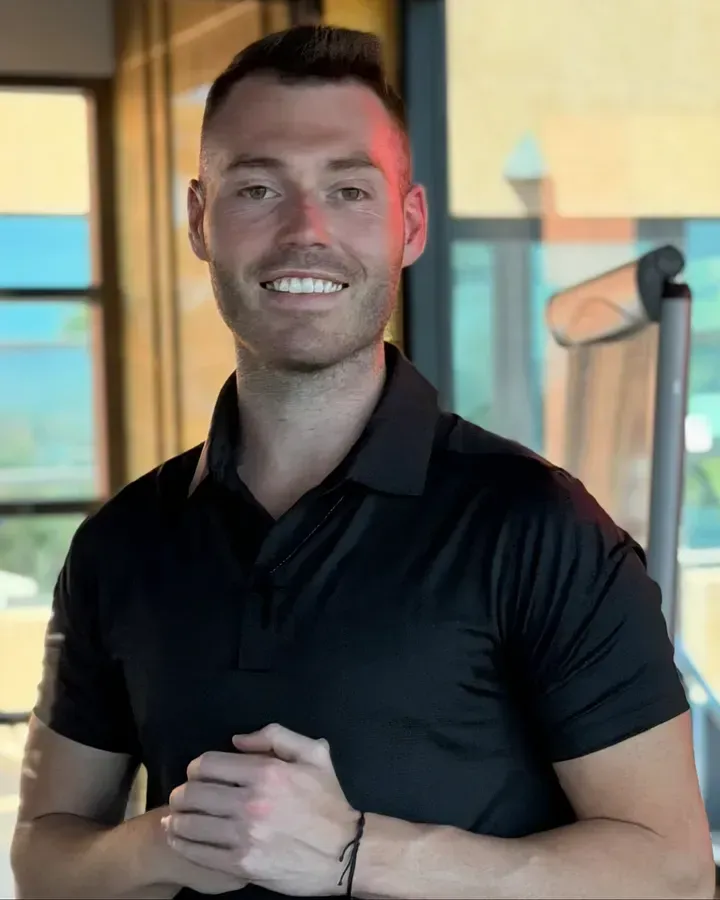
There is a moment most people experience at least once in their lives where fear and opportunity arrive at exactly the same time. For Austin Laudette, that moment came at an Outback Steakhouse, sitting in a booth with a blooming onion, hands shaking, heart pounding, debating whether to unmute himself on a Zoom call with 15 strangers.
He unmuted. And everything changed.
A Bag of Skittles
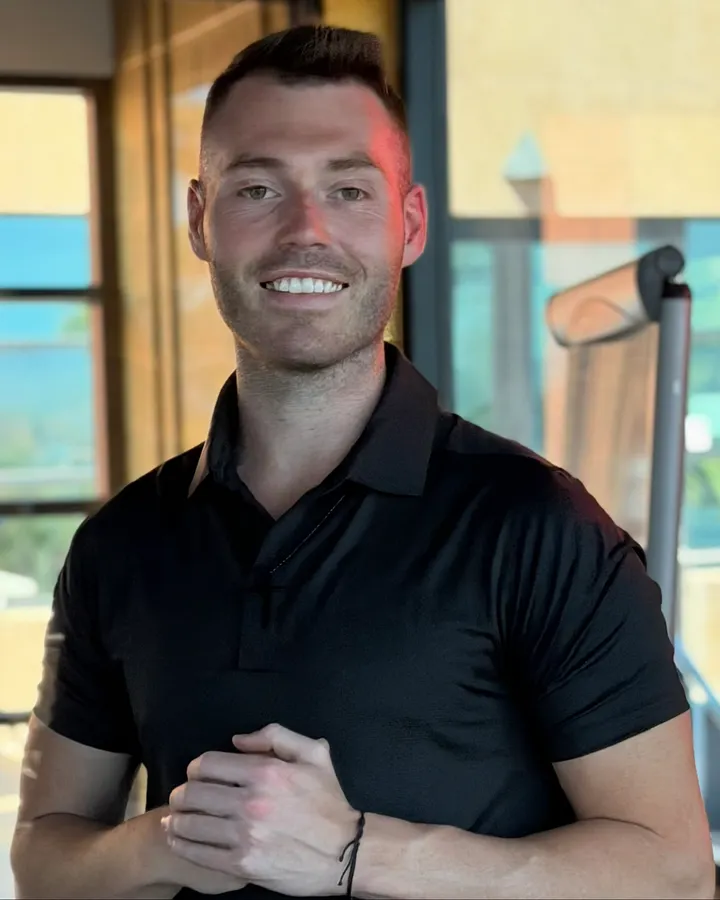
Austin works within the Elliott Group, a coaching and mentorship organization built around personal transformation. When he describes the culture of the team he belongs to, he reaches for a surprisingly simple image: a bag of Skittles.
“We’re all different Skittles in the bag,” he says, “all on the same mission.”
What holds them together is not identical backgrounds or identical strengths. It is something far more fundamental: they are all underdogs. Every person in that organization made a decision to have courage when they could have chosen fear. That shared choice, more than any skill or credential, is what defines them.
The Outback Moment
Austin’s journey into public speaking began not on a stage but in a restaurant. He was on a free Saturday Zoom call hosted by Ian and Evan, two of the founders of the Elliott Group. There were 15 people on the call, and when the Q&A opened, the room went quiet.
Someone said that this moment could change your life. Austin felt the fear grip him. He was not looking at the camera. His words came out stuttered and uncertain. But he asked his question anyway: how do you get good at public speaking when it terrifies you?
Ian’s answer was direct. “You’re public speaking right now. There are 100 people in that restaurant and 15 people on this call. You just overthink it. Quit running from pressure and start chasing it.”
Then Ian told him about Toastmasters. Austin went home and Googled it. He had another fight or flight moment. He signed up anyway.
That small act of courage, joining a free public speaking group full of people twice his age, reshaped his entire life. He showed up not knowing anyone, his hands sweating, heart racing, and introduced himself. For someone who had taken grade penalties in school just to avoid presenting in front of the class, it was an enormous moment.
“I realized,” Austin says, “that there is a bigger fear of public speaking than death. And that almost liberated me. Because if 90 percent of people are more scared of this than dying, then overcoming it puts you in the top 10 percent by default.”
Humor as a Bridge
Austin has studied his own patterns closely. He knows that before he speaks, whether in a room of 30 business owners or on a podcast, he reaches for humor first.
At a recent speaking event, he opened with a story about stopping at McDonald’s on the way into town, craving a caramel macchiato, and receiving what tasted like black coffee with milk. The letdown of expectation, he told the crowd, is exactly what a bad hire feels like. You think you’ve found the one who will build culture, sell, and lead, and a week in, you take a sip and realize something went wrong.
The room laughed. The tension broke. And that, Austin explains, is the whole point.
“When I crack a joke, I want them to realize I’m human. There’s nothing different between you and me. It normalizes the situation.”
He draws a direct line between public speaking and sales and coaching and every other form of human communication. The goal, in any of those contexts, is the same: you are a state inducer. You cannot give someone something you do not have. Before you can shift the energy in a room, you have to feel it yourself.
Bringing His Father Along
One of the more quietly remarkable things Austin has done is bring his father into the world that changed him.
His dad is a home remodeling business owner who did sales training as a young man but had never attended a seminar or worked with a coach as an adult. When Austin first told him about the Elliott Group program, his father was skeptical and cautious. A thousand-dollar investment sounded like a risk for a son who was still brand new to sales.
Austin knew his father would not accept a ticket as a gift. He would tell him to get a refund. So Austin told a small, loving lie: he said his father had been given a free plus one because of how much Austin had grown. He bought the ticket secretly and sold his dad on showing up.
They did the workout together. They suffered side by side. His father came in skeptical, saying he had seen sales training before, and he knew what motivational coaching looked like. By the end, he looked at his son and said, “Yeah, he’s good.”
That moment, a son inspiring his father, a man who once worried about his boy’s choices, now working on his own, is one Austin holds carefully.
The Phone Call That Redefined Purpose
If there is a single story that captures what Austin believes his purpose actually is, it is a phone call he received one afternoon from a number he did not recognize.
A young man’s voice came through, direct and a little desperate. He said that his friend had told him to call Austin, that Austin was the only one who could help. He had seen three doctors in the past month. None of them had been able to solve the problem. He was having panic attacks every time he tried to drive his car. He would have to pull over on the side of the road. He had gone to the hospital twice thinking he was having a heart attack. He had a family construction business. He could not get to job sites. His life was unraveling.
Austin’s first instinct was doubt. Was he really the right person for this? He was not a therapist. He was not licensed for anything. But the professionals had not helped, and this young man believed that Austin could.
One week earlier, Austin had been studying an old Tony Robbins video about neuro-linguistic programming, specifically about disassociation techniques used to break mental patterns tied to fear. He had watched Robbins work with a woman so terrified of snakes she could barely function, and within ten minutes, guide her to a place where she was laughing with a ten-foot snake around her shoulders.
Austin decided to try something similar.
He had the young man close his eyes and imagine he was sitting in a movie theater watching a film of himself in the car. What does it feel like, Austin asked. Nervous. Anxious. Impending doom.
Then Austin began to play with the associations. What if you dimmed the brightness? What if you turned the volume down to sixty, then thirty? What if you slowed it down? The young man began to feel the panic loosen its grip. Then Austin had him step back further, into the projection room, watching himself watching the movie. Double disassociation. Brightness all the way down. Volume all the way down. Pattern broken.
Then Austin built something new. Where in the world have you always wanted to go? Italy. What car would you drive? A red Ferrari. Who would be with you? My mom. He painted the picture in full color, turned the volume up, sped the movie forward, and had the young man step into the front row and feel it completely.
The next morning, Austin’s phone rang. The young man was screaming. Not from panic. From joy. He had driven his car for an hour. He was doing circles. Just driving.
“Seeing how I could guide him through that experience and help him heal,” Austin says, “was the coolest thing in the world for me.”
Truth Seeking and Truth Sharing
Ask Austin what he wants to be known for in the Elliott Group and he does not hesitate.
Truth seeking and truth sharing.
Not to be harsh. Not to be provocative. But from a place of love, to tell people what is actually true, regardless of whether it is comfortable. He watches his mentor Andy do this at the highest level, telling someone they are letting their family down, not to wound them but because they need to hear it and they know, somewhere beneath the ego, that it is right.
Austin does this in his own way, in coaching calls, in conversations with team members going through mental wars, in the quiet exchanges that leadership never sees. He was once the guy who nearly got fired for broken arrogance, for having ego without results, for thinking he knew things he did not. That history gives him access to people that others cannot reach.
“Ian and Evan look like they were born crushing it,” he says. “But two years ago I was almost exited from the company. I can really resonate with people it’s harder for them to reach.”
He also believes, deeply, that many of the truths people carry were never actually theirs to begin with. Beliefs planted at age six. Ideas about money being evil, or relationships equaling pain, are inherited from parents and grandparents and never once questioned until someone puts you in an environment where questioning becomes possible.
“You start realizing: why do I have that belief? Where did it come from? And then you can free yourself from it.”
The Advice He Would Give His Younger Self
When Austin distills everything down to the one thing he would say to someone just starting out, whether they are sixteen years old or a business owner of twenty years, it comes back to something beautifully simple.
Be the best you that you can be.
Not a second-rate version of your mentor. Not a copy of someone you admire. There has never been a greater version of you, and there never will be. That is not a limitation. That is a calling.
Martin Luther King Jr. put it this way: if you are a street sweeper, be the best street sweeper on the planet. Austin believes that is what success actually looks like. Not a comparison to others but a relentless pursuit of your own best.
“You’ll probably end up somewhere you never even imagined,” he says. “But it’ll take you there.”
About me:
I am currently a Master Facilitator for The Elliott Group in addition to being on the board of advisors for our Cultural Transformation Department in ELLIOTT ARMY.
With over 14 years of client service experience, I have held substantial leadership roles in the automotive industry. I’m also an accredited coach, a writer, a speaker, and a triathlon finisher. To contact me for engagements, you can reach me at [email protected].
