ELLIOTT ARMY SERIES: Work Harder on Yourself to Create Margin
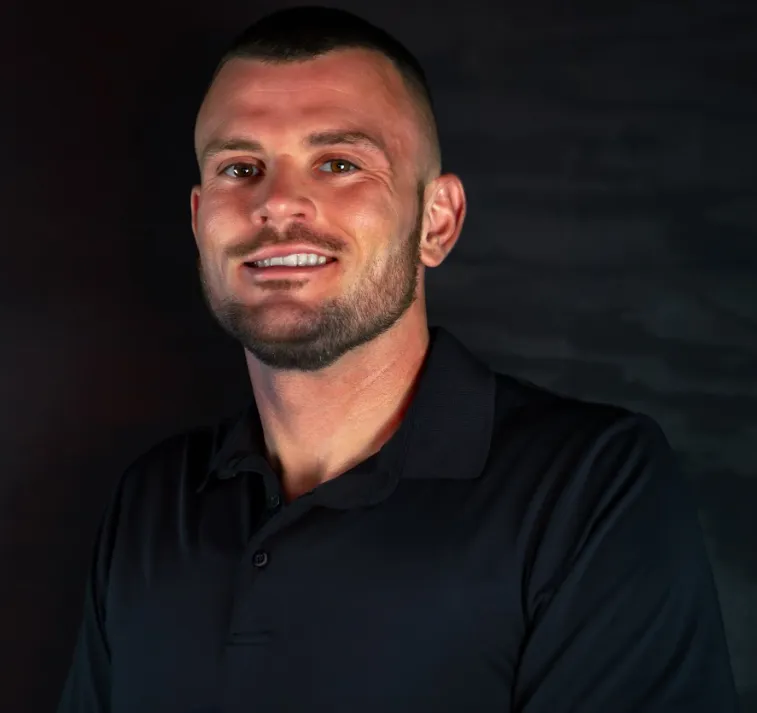
There is a version of Luke Nelson that most people never got to see. He was the big, quiet kid who would sneak off to the bathroom during church rehearsals just to avoid saying his one line on stage. He was the pastor’s kid who loved sports and the outdoors but was terrified of what people thought of him. He was the husband and father drinking vodka in secret from a closet while everyone around him believed he was five years sober.
That version of Luke is not gone. He will tell you that himself. But he is no longer running the show.

Luke grew up as the middle child of three in a household centered around faith and music. His father was a music pastor. His older sister and younger brother both gravitated naturally toward performance and the stage. Luke gravitated toward sports, fishing, and the outdoors, and spent the better part of his childhood telling himself he was just an introvert.
But it was more than that. From a young age, Luke carried an almost paralyzing fear of what other people thought of him. He could play piano. He could play drums. He sang in the high school choir, though he admits the only reason he did it was because he could hide inside the group. He was never singled out, never exposed, never truly seen.
He remembers being cast in a Christmas production at his father’s church and spending every rehearsal hiding in the bathroom when his cue came up. Nobody made him feel that way. There was no defining moment of abuse or shame that he can point to. It was simply a quiet, persistent belief that took root early and stayed with him for decades. He was a big guy with a small personality that did not match his size, and reconciling those two things has been one of the central challenges of his life.
How It Started and How It Took Over
Luke was homeschooled from first through eighth grade. His social world was the church. When his parents gave him the choice of which high school to attend, he chose the private school where his church friends were going, partly because he was afraid of being seen as the weird homeschool kid anywhere else.
It was there that things began to shift. His new friend group smoked weed and drank, and Luke went along with it because belonging felt better than standing apart. By the time he was seventeen or eighteen, substance use had quietly become part of his identity. He carried it into college and into his early twenties, cycling through sobriety and relapse in a pattern that would define the next decade of his life.
He got married in his early twenties. He got sober. For five years, things were genuinely good. Then he slipped, and this time there was no going out with friends, no social drinking. His friends knew he was sober. So it became a secret. Vodka in the closet. Hidden and alone. His wife Kaylee, could feel something was wrong. The weight was coming back. The promises were being broken. The lies were stacking up.
The moment it all collapsed happened in his living room in 2017. He came out of a blackout to find his wife and children crying on the couch across from him, his parents sitting nearby. They had staged an intervention. They told him clearly that Kaylee and the kids would leave if he did not get help. That was the line. He got help.

The Climb Back and the Voice Memo That Changed Everything
What followed was not a single dramatic turning point but a slow and unglamorous rebuilding. Luke connected with a mentor who had twenty years of sobriety. He started attending AA. He lost weight. He worked on his faith. He did the quiet, unglamorous work that nobody puts on social media.
About a year and a half into that process, he stumbled across Andy Elliott on YouTube through a podcast appearance. Andy was talking about being disconnected from his family, being out of shape, and going through the motions in a career that looked fine from the outside but felt hollow on the inside. Luke felt like he was hearing his own story read back to him.
He reached out. He started calling Evan McLain every Sunday. He signed up for events. Before his first one, he sent Evan a message letting him know his colleague could no longer make the trip. Evan sent back a voice memo almost immediately. The message was short. It said that it did not matter, that Luke had made the commitment, and that he was family.
Luke still has that voice memo on his phone.
He attended five events in a row. Then came a sales seminar in Chicago. He drove six hours from Minneapolis, sat down at lunch with Andy Elliott, and told him he was thinking about moving to Arizona to be closer to the community that had changed his life. Andy stopped him mid-sentence and told him to forget that plan and just come work for him instead.
On the way back to his car after lunch, Luke got a notification that his credit card had been used at a Foot Locker across the city. Someone had broken into his car and stolen his wallet and AirPods. He cancelled the card, skipped the police report, drove back to Kaylee, and told her he had just been offered a job. By August of that year, they had sold the house, packed up the kids, and moved to Arizona.

What He Wants to Be Known For
Luke is not interested in being known for his numbers or his titles. What he wants, more than anything, is to be someone people can count on. He still has his Minnesota area code. He still gets calls from customers he sold cars to years ago, people who did not look up the dealership or call the sales manager but went straight to him because he left an impression.
He wants to bring that same reliability to every part of his work and his life. He wants to be the person his teammates call at any hour for any reason, whether it is about revenue, relationships, or just figuring out how to navigate a hard season. He and Kaylee regularly trade weekends with other young families in their circle so that everyone gets a little breathing room.
He credits a lot of that orientation toward community to growing up in a pastor’s household, but also to something harder-earned. When you have been judged at your lowest, you tend to stop being so quick to judge other people at their worst.
The Advice He Keeps Coming Back To
When asked what he would tell anyone listening, regardless of where they are in life, Luke did not hesitate. Work harder on yourself than you do on your job. Not because it sounds good, but because most people do not actually have a sales problem or a leadership problem or a business problem. They have a personal problem that is bleeding into everything else.
He gets up at three thirty in the morning to go to the gym. Not for the recognition. Not for the story. He does it to create margin. When he fills himself up first, he has more to give to his wife, his kids, his team, and anyone else who needs something from him. That discipline, that daily investment in himself, is the foundation on which everything else is built.
He is in his mid-thirties now. He has been married for nearly twelve years. He has three kids. He has a career that did not exist in the form it takes today just a few years ago. And he still carries that old version of himself around, the shy kid, the addict, the man riddled with shame who could not understand why anyone would stay.
He does not try to hide that version anymore. He believes it is exactly where his usefulness lives. You are most qualified to help the person you used to be. That is the line he comes back to, and it is the reason he is finally willing to tell the story.
About me:
I am currently a Master Facilitator for The Elliott Group in addition to being on the board of advisors for our Cultural Transformation Department in ELLIOTT ARMY.
With over 14 years of client service experience, I have held substantial leadership roles in the automotive industry. I’m also an accredited coach, a writer, a speaker, and a triathlon finisher. To contact me for engagements, you can reach me at [email protected].
