
Why Comfort Is the Most Dangerous Word in Your Career
There is a particular kind of professional paralysis that does not announce itself. It does not come with a pink slip or a performance review. It settles in quietly, somewhere between a steady paycheck and a calendar that looks the same every week. It feels, on the surface, like stability. But for many people, especially those who have spent decades building careers that others would admire, it is something else entirely. It is comfort mistaken for safety.

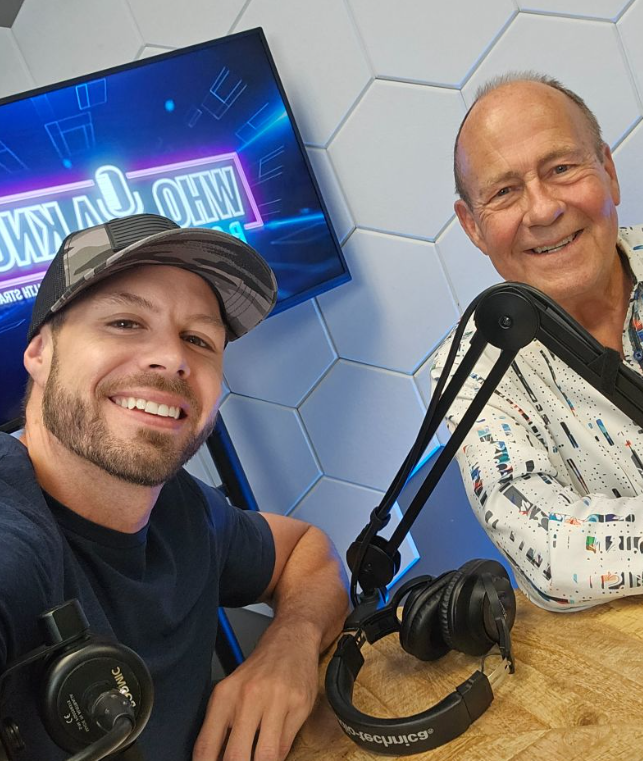
This week, I sat down with Trevor Houston, a career strategist, entrepreneur, and connector who has made it his mission to challenge exactly that assumption. Trevor has built a reputation around helping professionals, many of them later in their careers, move from the illusion of job security into something far more durable: ownership and control of their own future. He has been featured across major platforms, built a personal brand that speaks plainly and without apology, and has spent years asking the questions that most people in the workforce are not ready to hear.
This conversation is for anyone who has ever felt stuck, overlooked, or genuinely unsure of what comes next.
The Problem with Playing It Safe
Most people do not set out to be complacent. They set out to be responsible.
They take the stable job. They accumulate years of experience. They keep their head down during restructuring cycles, update their LinkedIn when the market gets nervous, and tell themselves that loyalty and competence will be enough. For a long time, that story holds together. Then, somewhere around their late forties or fifties, the story stops making sense.
Trevor has seen this pattern repeat across industries and income brackets. The professional who has done everything right suddenly finds that the rules have changed without anyone telling them. Companies lean younger. Algorithms filter resumes before human eyes ever see them. A title that once carried weight now reads like a liability.
“The danger,” Trevor explains, “is not failure. Most of these people have never really failed. The danger is that they have never had to build anything from scratch, and now they have to, without the infrastructure they always relied on.”
This is the comfort trap in its most complete form. Not laziness. Not lack of ambition. Just a long, unexamined assumption that the system would keep working.
Reinvention Is Not a Crisis. It Is a Strategy.
One of the most important reframes Trevor offers is this: reinvention is not something that happens to you when things fall apart. It is something you choose before things fall apart, and it is available at any stage of a career, not just at the beginning.
That reframe matters enormously because the cultural story around reinvention tends to treat it as recovery. You lost something, so now you rebuild. But Trevor’s approach is different. He positions reinvention as a proactive strategy, a decision to move toward something rather than away from something else.
This distinction changes everything about how people approach the process.
When reinvention is reactive, it is soaked in urgency and self-doubt. When it is proactive, it becomes something closer to entrepreneurial thinking: identifying an opportunity, assessing your assets, and figuring out how to position what you already know and have done to create new value.
For professionals who have spent years accumulating skills, relationships, and institutional knowledge, this shift in framing can be genuinely liberating. The experience they thought might be working against them turns out to be the asset they have been sitting on all along.
From Employee Mindset to Ownership
The transition Trevor helps people navigate is not just logistical. It is psychological.
The employee mindset, built over decades of working within someone else’s structure, is optimized for execution. Show up. Deliver. Repeat. It is not designed for ambiguity, for self-direction, or for the particular discomfort of building something where no clear path yet exists.
Ownership requires a different operating system entirely. It asks you to tolerate uncertainty without interpreting it as failure. It asks you to make decisions without a manager to approve them, to define success without a job description to reference, and to keep moving forward even when the next step is not obvious.
Trevor is direct about the fact that this transition is hard, and that most people underestimate how deep the rewiring has to go. But he is equally direct about why it is worth doing.
“Freedom is not what you get when you retire,” he says. “Freedom is what you build while you still have the energy and the relationships to build it.”
That distinction, between freedom as a reward deferred to the end and freedom as something constructed now, is at the core of what makes Trevor’s work resonate. It is not a productivity pitch. It is a fundamentally different way of thinking about what a career is for.
What It Actually Takes
There is no clean three-step framework here, and Trevor would be the first to tell you that anyone selling you one is probably more interested in your credit card than your career.
What the transition actually requires, based on Trevor’s experience working with professionals across industries, is a combination of self-awareness, community, and willingness to be visible.
Self-awareness means understanding not just what you have done but what you are genuinely good at, what energizes you, and what kind of contribution you want to make going forward. It means being honest about the parts of your old career that you are glad to leave behind and the parts you want to carry with you.
Community means building real relationships, not a contact list, not a network that only activates during a job search, but genuine connections with people who are building things, thinking differently, and willing to invest in each other’s growth. Trevor himself is known as a connector, and it is not incidental to his work. It is central to his philosophy. You cannot build alone, and you certainly cannot reinvent alone.
Visibility means being willing to share your perspective, your experience, and your thinking in public, even before you feel ready, even before you have it all figured out. Personal brand is not a vanity project. For professionals making a transition, it is the bridge between who you have been and who you are becoming.
The Real Question
By the end of our conversation, the question Trevor kept returning to was not about strategy or tactics. It was something more essential.
What does it mean to create a life that is actually yours?
For some people, that means building a business. For others, it means consulting, advising, or creating something entirely new. For others still, it means staying in the workforce but on fundamentally different terms, with a clearer sense of what they are trading their time for and why.
The specific answer matters less than the act of asking the question honestly and not letting comfort talk you out of it.
If you have ever sat with the feeling that you are capable of more than your current situation is asking of you, or that the next chapter could look genuinely different from everything that came before, this is the conversation I would encourage you to listen to.
Because the biggest risk in your career might not be the one you have been watching for. It might be the one you stopped noticing because it felt so familiar.
Trevor Houston is a career strategist, entrepreneur, and connector dedicated to helping professionals transition from job dependency to true ownership of their future. You can find him across major platforms where he continues to challenge conventional thinking about work, career, and freedom.
About me:
I am currently a Master Facilitator for The Elliott Group in addition to being on the board of advisors for our Cultural Transformation Department in ELLIOTT ARMY.
With over 14 years of client service experience, I have held substantial leadership roles in the automotive industry. I’m also an accredited coach, a writer, a speaker, and a triathlon finisher. To contact me for engagements, you can reach me at [email protected].
